
Security Testing

GEM’s security testing experts combine automated security analysis with expert validation to identify vulnerabilities faster and more accurately – scanning applications and infrastructure, detecting security weaknesses, and prioritizing risks for remediation – validated by security engineers at every step.


Get a security testing assessment

Security Testing

Benefit from GEM’s proactive and overarching security testing for robust, resilient software

Get Started

Why Security Testing by GEM Outperforms Reactive Security Checks

Most applications get some form of security check before launch. Few get security testing integrated throughout development, with findings tracked, prioritized, and validated after they’re fixed – not just a report handed off once.

Enterprise Use Cases for Security Testing

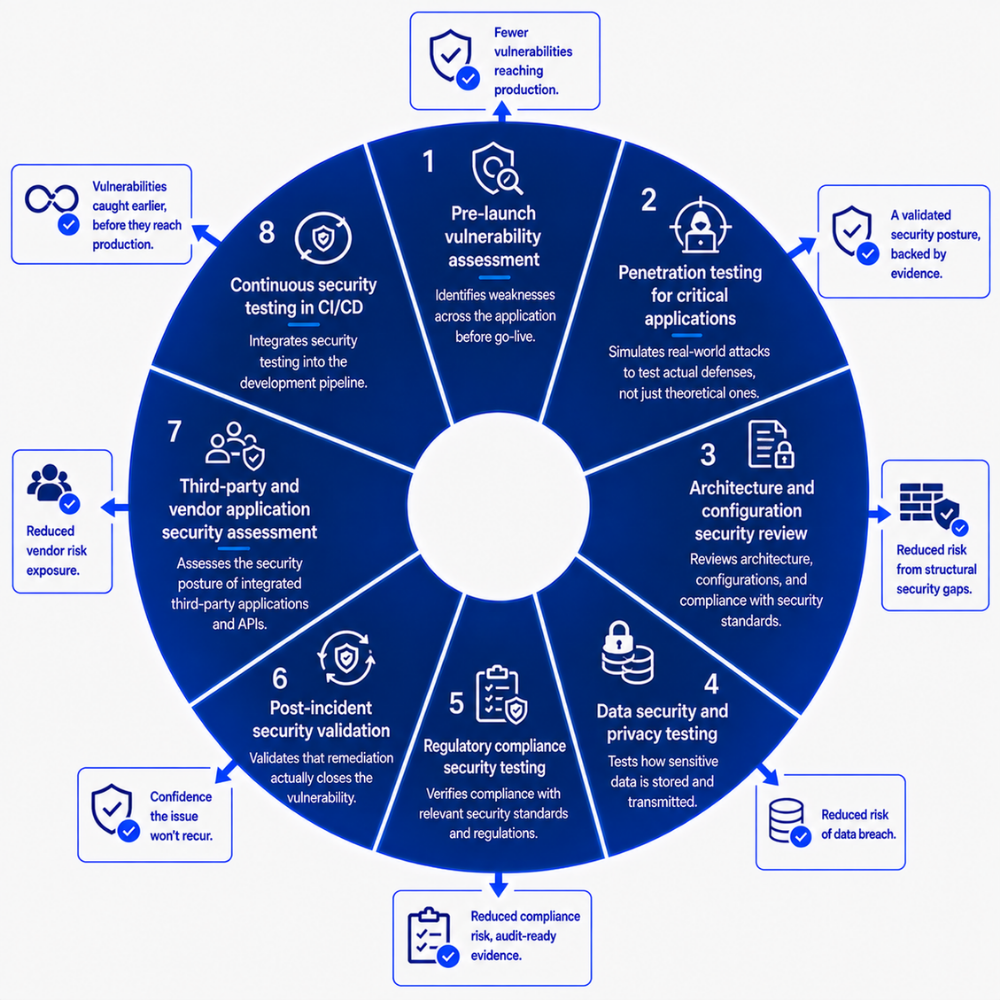
Through GEM’s security testing expertise, organizations have enhanced their applications’ defenses and created robust protection against evolving threats.

use case - GEM's security testing services

Key Components of Our Security Testing Approach

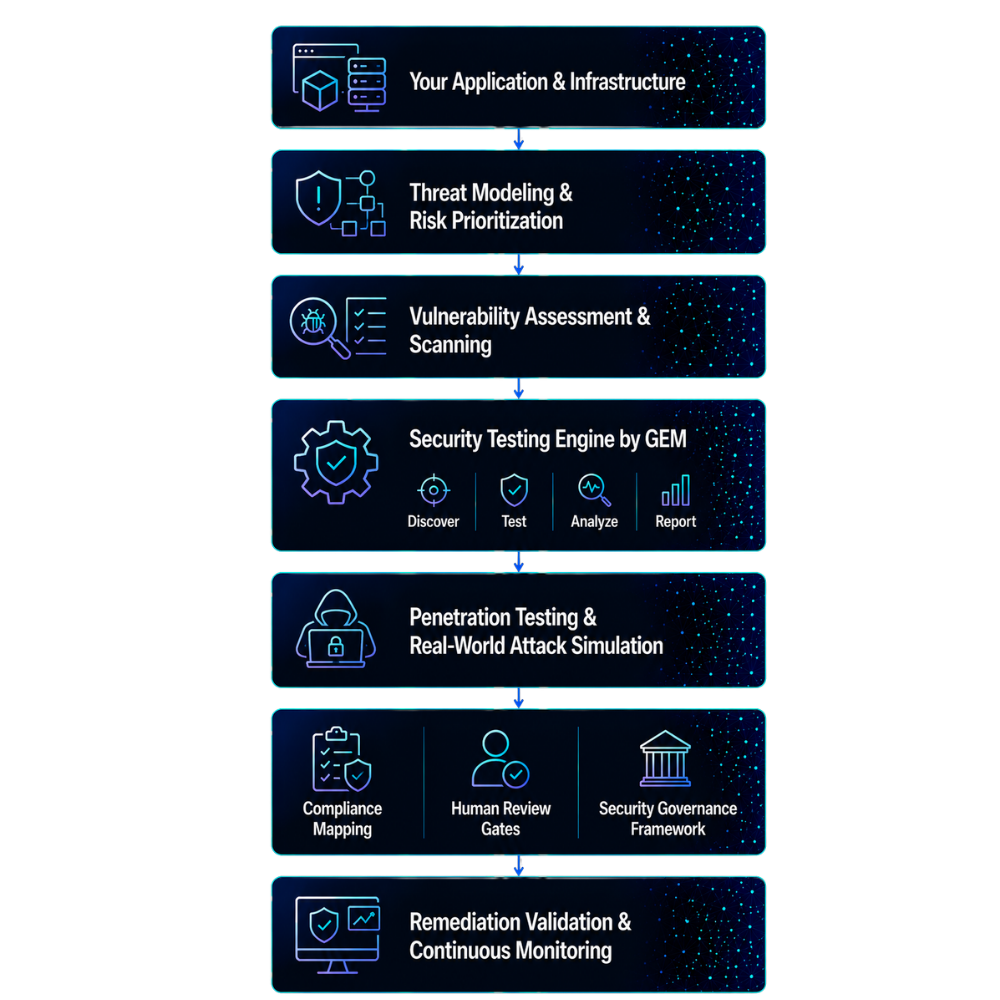
GEM tests security the way real attackers would approach your application – not just running a scanner once and handing over a report.

architecture - GEM's security testing services

How We Deliver

Step 1: Assess & Scope

Map the application, infrastructure, and threat model to define testing scope and priorities.

Step 2: Improved data protection

Run vulnerability assessment and penetration testing, simulating real-world attacks against the defined scope.

Step 3: Remediate & Validate

Provide remediation guidance, then re-test to confirm vulnerabilities are actually closed

Expected Business Outcomes

Every Security Testing engagement begins with a security assessment. GEM evaluates application and infrastructure security, identifies vulnerabilities and control gaps, assesses security risks, and delivers a prioritized remediation roadmap before implementation.

Why Choose GEM?

GEM’s Security Testing Success Stories

See more

FAQs About Our Security Testing Services

Security testing identifies vulnerabilities, misconfigurations, and weaknesses in an application before attackers can exploit them, protecting sensitive data, user trust, and business reputation.

Functional & E2E Testing confirms the application behaves correctly for legitimate use. Security Testing looks for how the application responds to malicious or unauthorized use, and where it could be exploited. The two are complementary.

Vulnerability assessment scans systematically for known weaknesses. Penetration testing goes further, simulating real-world attacks to see whether those weaknesses – and others – can actually be exploited.

GEM aligns testing to widely recognized references such as the OWASP Top 10, the NIST Cybersecurity Framework, and ISO/IEC 27001, adapted to your industry and regulatory requirements.

Security testing should happen at key milestones – before major releases, after significant architecture changes, and on a regular cadence for critical applications – rather than as a one-time event.

Yes. Automated security checks can run as part of the pipeline, catching known vulnerability classes earlier, complemented by periodic manual penetration testing for deeper coverage.

Yes. GEM can assess the security posture of integrated third-party applications, APIs, and vendor connections where they fall within the agreed testing scope.

GEM re-tests remediated findings to confirm the fix actually closes the vulnerability, rather than relying on a ticket being marked resolved.

Applications are prioritized by risk and business criticality, with testing extended across the portfolio incrementally rather than attempting full-depth testing everywhere at once.

Related Articles

Discover Other Quality Assurance & Testing Services

Tell us what’s holding your business back

Get a free transformation assessment: the right technology opportunities, expected business impact, and a practical roadmap. We reply within 1 business day.