
Data Platform & Lakehouse Services
GEM’s Data Platform & Lakehouse experts helps enterprises design, modernize, and scale governed data platforms and lakehouse architectures that unify data for BI, analytics, AI, and real-time business operations.
Modernize, secure, and scale your data infrastructure for long-term success
Traditional data estates often separate warehouses, data lakes, streaming systems, BI layers, and AI sandboxes into different platforms. This creates duplicated pipelines, inconsistent metrics, unclear ownership, and rising operational cost.
A lakehouse architecture reduces that fragmentation by combining scalable storage, reliable data management, governed access, and multiple analytics and AI workloads on a common platform foundation.
Separate data lakes, warehouses, and AI sandboxes
Duplicated pipelines and inconsistent business definitions
Raw data is stored but not trusted for enterprise reporting
Governance applied late or per tool Performance and cost managed reactively
Data teams deliver one-off datasets AI projects depend on ad hoc extracts

Unified architecture for BI, analytics, data science, GenAI, and AI agents
Shared ingestion, transformation, semantic, and governance layers
Medallion-style raw, validated, and curated layers improve quality progressively
Catalog, lineage, access control, audit, and policy enforcement built into the platform
Workload-aware architecture, storage/compute optimization, and FinOps visibility
Reusable data products with ownership, documentation, quality checks, and SLAs
AI-ready data foundation for governed analytics, ML, and agentic workflows
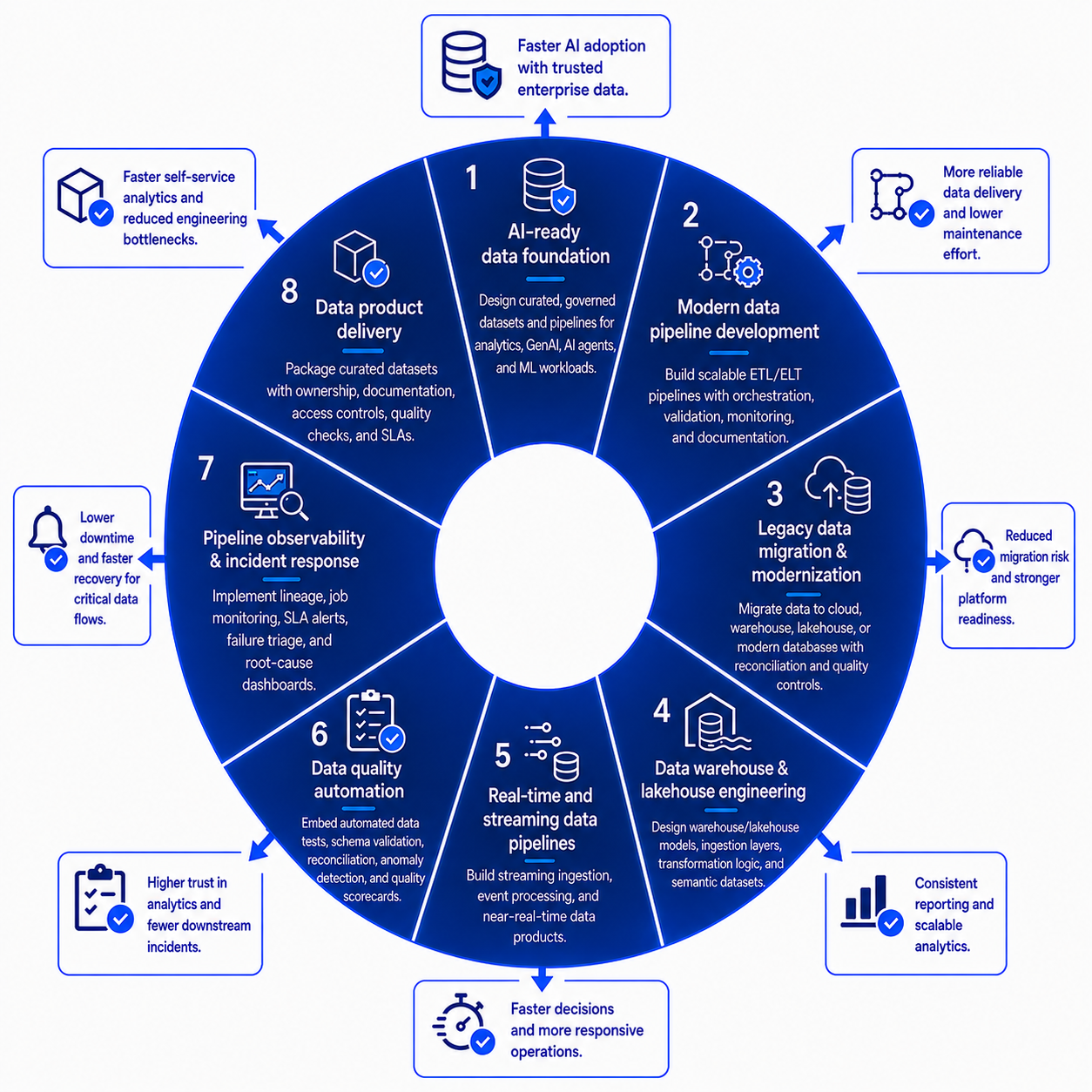
From unified data foundations to AI-ready insights, we help enterprises turn their data platform & lakehouse into measurable business value.
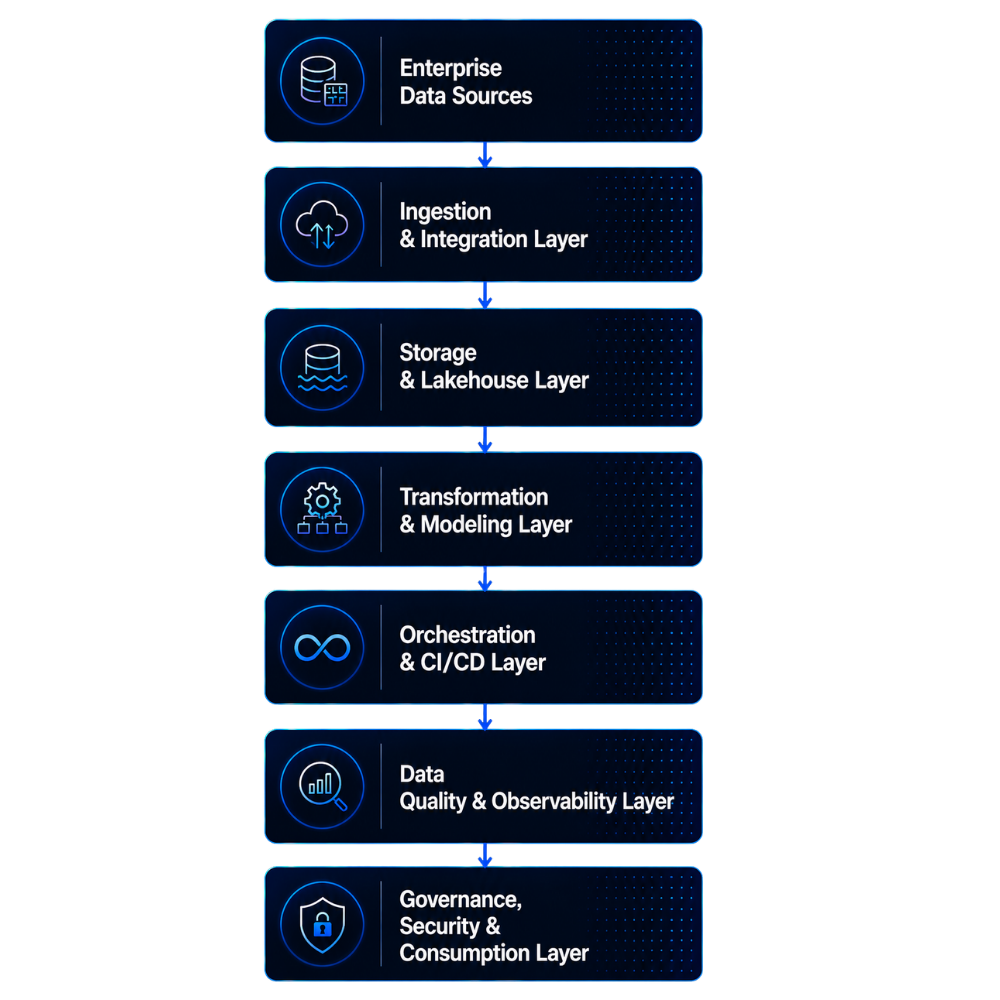
Audit current platforms, workloads, data domains, cost, governance gaps, BI/AI use cases, migration risks, and operating model.
Design lakehouse architecture, medallion layers, governance model, security controls, metadata, tooling, workload patterns, and migration approach.
Implement platform foundations, ingestion patterns, curated layers, data products, access controls, dashboards, and priority workload migration.
Monitor adoption, cost, quality, freshness, performance, lineage, and access; expand domain by domain.
A data platform & lakehouse engagement should start with measurable outcomes, not only architecture diagrams. GEM defines the business case around reporting speed, platform consolidation, AI readiness, governance maturity, data quality, cost, and reuse.

Reduce the time required to publish governed, reconciled, and business-ready datasets.

Consolidate duplicated storage, pipelines, semantic logic, and tooling where it creates value.

Provide governed, documented, and reusable data products for GenAI, ML, forecasting, and AI agents.
Optimize storage, compute, workload scheduling, query patterns, and FinOps visibility.

Improve lineage, access control, auditability, data ownership, and policy enforcement across the data lifecycle.

Make curated datasets easier to discover, understand, request, and reuse across business teams.
A data platform is the foundation used to ingest, store, govern, process, and serve enterprise data. A lakehouse combines data lake scalability with data warehouse-style reliability and analytics access so teams can support BI, data science, ML, and AI from a more unified foundation.
A data warehouse is typically optimized for structured BI and SQL reporting. A lakehouse supports both structured and unstructured data, data engineering, analytics, and AI/ML workloads on a shared architecture while still providing governance and reliable tables.
Lakehouse modernization is worth considering when reporting is slow, data definitions conflict, data lakes are not trusted, AI projects depend on ad hoc extracts, cloud costs are rising, or teams maintain duplicated pipelines across multiple tools.
No. Data Platform & Lakehouse focuses on the target platform architecture and foundation. Data Engineering & DataOps focuses more on building, operating, testing, monitoring, and improving the pipelines and data products that run on that foundation.
Medallion architecture is a layered lakehouse architecture pattern that progressively improves data quality from raw ingestion to validated and curated datasets, often described as bronze, silver, and gold layers.
ROI can be measured through faster reporting cycles, fewer duplicated pipelines, lower platform cost, better data quality, higher self-service adoption, improved AI readiness, and reduced time spent resolving data issues.
No. A lakehouse provides governed data foundations for BI tools. Existing BI platforms can continue to consume curated datasets or semantic models from the lakehouse.
Yes. A lakehouse can support batch and streaming workloads when the architecture includes event ingestion, streaming transformations, freshness monitoring, and appropriate serving patterns. For example, Microsoft Fabric lakehouse supports lakehouse workloads with Spark, SQL access, pipelines, and Power BI integration.
The client should own the architecture, data models, pipelines, governance rules, documentation, dashboards, and platform configuration. GEM can provide ongoing support or optimization if needed.
Tell us what’s holding your business back
Get a free transformation assessment: the right technology opportunities, expected business impact, and a practical roadmap. We reply within 1 business day.