




Case study
76% Faster Healthcare Compliance with CMDB: Building A More Secure IT Foundation
- Team size: 5
- Development time: 8 months
Explore more case study
Background
Healthcare organizations are managing increasingly connected environments spanning clinical systems, IT infrastructure, networks, and medical devices. Yet maintaining a complete and accurate view of these assets remains a challenge. Recent HHS analysis found that while 91% of participating organizations monitor devices on their networks, only 52.6% maintain an inventory of personal devices connected to those networks, highlighting a significant gap between network visibility and asset inventory.
The challenge is particularly relevant as HHS moves toward stronger expectations around technology asset inventories and network maps showing how electronic protected health information (ePHI) moves across systems.
Against this backdrop, a multi-site hospital network spanning various hospitals and clinics faced a similar challenge. IT and biomedical engineering teams maintained infrastructure and device information in separate systems, making it difficult to identify which assets handled sensitive healthcare data, prepare for HIPAA audits, and detect unauthorized changes to clinical network segments. The organization initiated a Configuration Management Database (CMDB) initiative to create a unified, continuously updated view of its IT and biomedical infrastructure.
GEM joined as a technology engineering partner to connect asset discovery, biomedical inventory, compliance classification, change governance, and configuration monitoring.

Challenges
Before implementation
- Fragmented infrastructure data: IT and biomedical engineering teams maintained infrastructure and device information in separate systems that were not consistently reconciled.
- Limited compliance visibility: The organization lacked a unified view of which systems and infrastructure components handled protected health information and were therefore relevant to HIPAA compliance.
- Manual audit preparation: Compliance teams relied heavily on spreadsheets and cross-departmental reconciliation to prepare for audits.
- Limited change visibility: Unauthorized changes to clinical network segments could remain undetected until they contributed to operational incidents.
- Complex security correlation: Security teams lacked immediate visibility into affected systems, their business criticality, and data sensitivity during incidents.
During implementation
- Cross-system integration: Infrastructure discovery needed to be combined with biomedical device inventory maintained in a separate system of record.
- Data classification: Configuration items needed to be associated with data sensitivity and business criticality.
- Change governance: HIPAA-relevant configuration items required stronger controls around changes and approvals.
- Continuous data accuracy: The CMDB needed to remain current as infrastructure evolved across multiple hospitals and outpatient locations.
- Operational scalability: The foundation needed to support additional facilities without proportionally increasing compliance and infrastructure management resources.

Solution
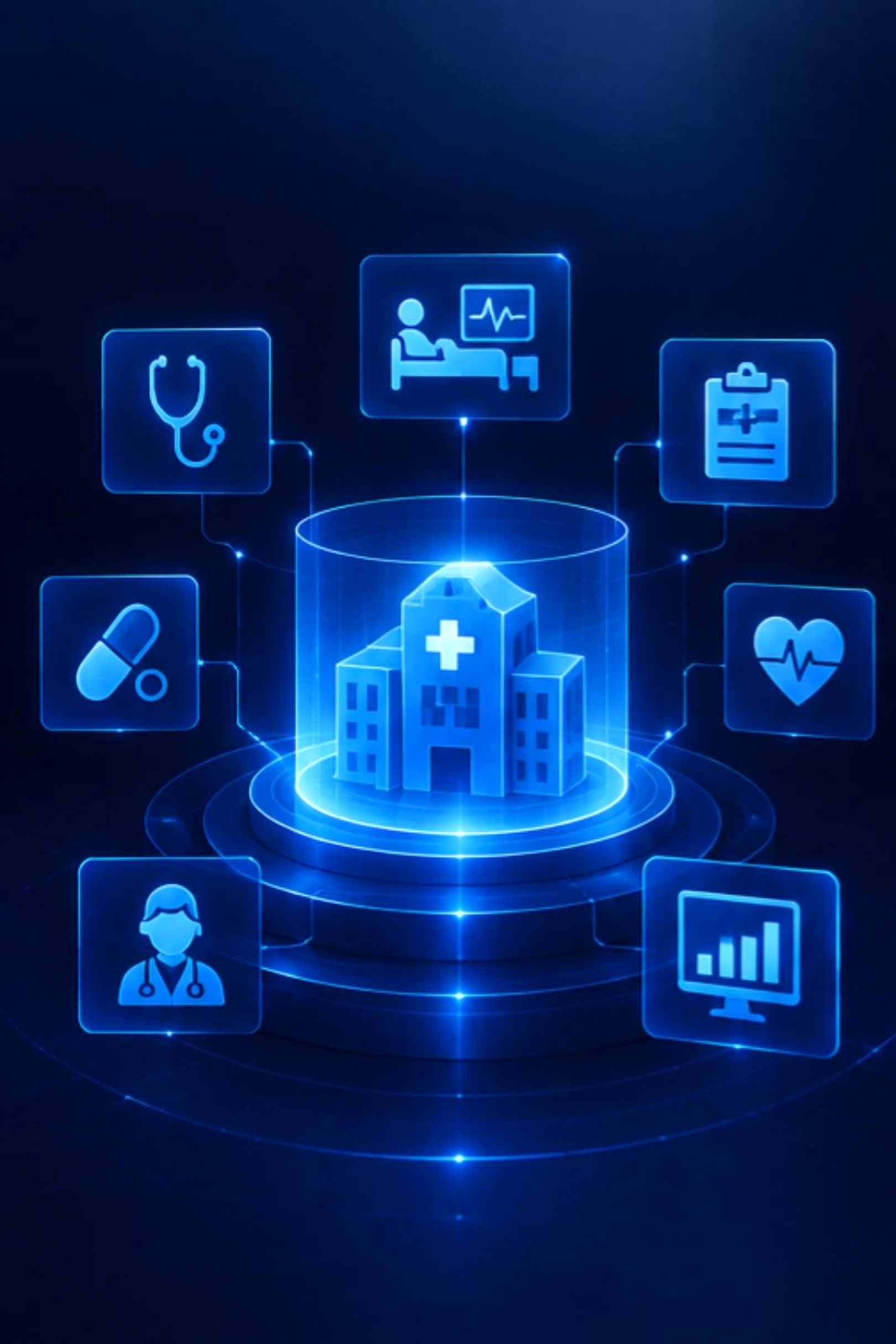
GEM established a centralized CMDB foundation designed to provide a consistent view of the healthcare organization’s technology environment. The solution combined automated infrastructure discovery, biomedical asset integration, compliance classification, change governance, and configuration drift detection.
1. Enterprise Infrastructure Mapping
GEM mapped the organization’s core technology environment into the CMDB, including:
- Clinical systems
- Network segments
- Servers and infrastructure
- Biomedical devices
- Supporting technology components
Each configuration item was structured to provide greater visibility into its operational role, business criticality, and data sensitivity.
This created a more connected representation of the technology environment across hospitals, clinics, and supporting infrastructure.
2. Automated Discovery and Configuration Visibility
Automated discovery capabilities were introduced to continuously maintain visibility across the network and server infrastructure.
Rather than relying solely on manually maintained inventories, the CMDB could identify and update infrastructure configuration data as the environment changed.
This provided teams with a more current view of the technology landscape while reducing the operational effort required to maintain infrastructure records.
3. Biomedical Device Integration
Because biomedical devices were managed through a separate engineering system of record, GEM established an integration layer to synchronize biomedical asset information into the CMDB.
This allowed biomedical infrastructure to be considered alongside traditional IT infrastructure, creating a broader configuration view across the healthcare technology environment.
The integrated model helped connect devices and systems with their operational and compliance context.
4. HIPAA-Relevant Change Governance
Configuration items associated with HIPAA-relevant systems were tagged according to their compliance and data sensitivity characteristics.
Changes affecting these configuration items were subject to an approved Request for Change (RFC) process.
This established a clearer governance model in which sensitive infrastructure changes could be identified, reviewed, and tracked as part of the organization’s standard change management process.
5. Configuration Drift Detection
GEM introduced drift detection to identify configuration changes that occurred outside the approved change process.
When a HIPAA-relevant configuration item changed without the expected governance workflow, the deviation could be flagged for review.
This strengthened the connection between configuration management, compliance governance, and operational security.
6. Security Incident Correlation
By bringing configuration information, system criticality, and data sensitivity into a common CMDB model, security and operations teams gained faster context during incidents.
When an affected system was identified, teams could more quickly determine:
- What the system supported
- How critical it was to operations
- Whether it handled sensitive healthcare data
- Which infrastructure components were associated with it
This improved the speed and quality of incident investigation and prioritization.
Tech stack
- ServiceNow CMDB
- ServiceNow ITOM Visibility & Discovery
- Service Graph Connectors
- IntegrationHub ETL
- Identification & Reconciliation Engine (IRE)
- CMDB Health
- ServiceNow ITSM
- CSDM
- REST APIs
Output
The engagement delivered a centralized configuration management foundation designed to improve visibility and governance across the healthcare organization’s distributed technology environment. Key outputs included:
- Unified CMDB covering clinical systems, infrastructure, network segments, and biomedical devices.
- Automated discovery for network and server infrastructure.
- Integration with the biomedical engineering system of record.
- Data sensitivity and business criticality classification for configuration items.
- Governance workflows for changes to HIPAA-relevant systems.
- Configuration drift detection for unauthorized changes.
- Improved visibility for compliance and security teams.
- A scalable CMDB foundation supporting newly acquired healthcare facilities.
Impacts
Operational efficiency
- 76% reduction in compliance audit preparation time, from approximately 21 days to 4 days.
- Reduced reliance on manual spreadsheet reconciliation across departments.
- Improved visibility into systems and infrastructure associated with sensitive healthcare data.
- Established a more structured evidence base for compliance and audit activities.
- Unauthorized changes affecting HIPAA-relevant systems fell to a small fraction of previous levels after drift detection was introduced.
- Improved visibility into changes affecting sensitive clinical infrastructure.
- Strengthened the connection between configuration management and approved change processes.
Business transformation
- Improved security incident correlation by making affected systems, business criticality, and data sensitivity immediately visible.
- Enabled security teams to assess the potential impact of infrastructure incidents more efficiently.
- Created a more connected view of IT, clinical, and biomedical infrastructure.
- Extended CMDB coverage to two newly acquired clinics without adding compliance staff.
- Established a scalable foundation for managing infrastructure across an expanding healthcare network.
- Reduced dependence on fragmented asset inventories and manual reconciliation processes.
Closing remarks
Effective healthcare IT governance requires more than maintaining an inventory of technology assets. Organizations need a connected and continuously updated view of their infrastructure, together with the governance mechanisms required to protect sensitive systems and support regulatory compliance.
Through this engagement, GEM helped establish a centralized CMDB foundation connecting clinical systems, biomedical devices, infrastructure discovery, compliance classification, change governance, and security visibility.
Explore a relevant ServiceNow case here: Transforming Cloud Operations with Scalable ServiceNow Workflow Automation for an ICT Provider