Data Engineering & DataOps Services

GEM’s Data Engineering & DataOps experts helps enterprises design, build, migrate, and operate reliable data pipelines and AI-ready data platforms – with DataOps practices that make data trusted, observable, governed, and ready for analytics and AI.

Get a DataOps maturity assessment

Data Engineering & Data Migration

Modernize, secure, and scale your data infrastructure for long-term success

Get Started

Why DataOps Makes Data Engineering Production-Ready

Traditional data engineering focuses on moving and transforming data. That is necessary, but not enough when data powers board reporting, AI models, customer analytics, compliance workflows, and operational decisions.

DataOps adds the operating discipline required to keep pipelines reliable after go-live: automated validation, deployment controls, monitoring, lineage, ownership, and continuous improvement.

Already running data pipelines or migration programs? GEM can stabilize and modernize your current data estate instead of starting from zero.”

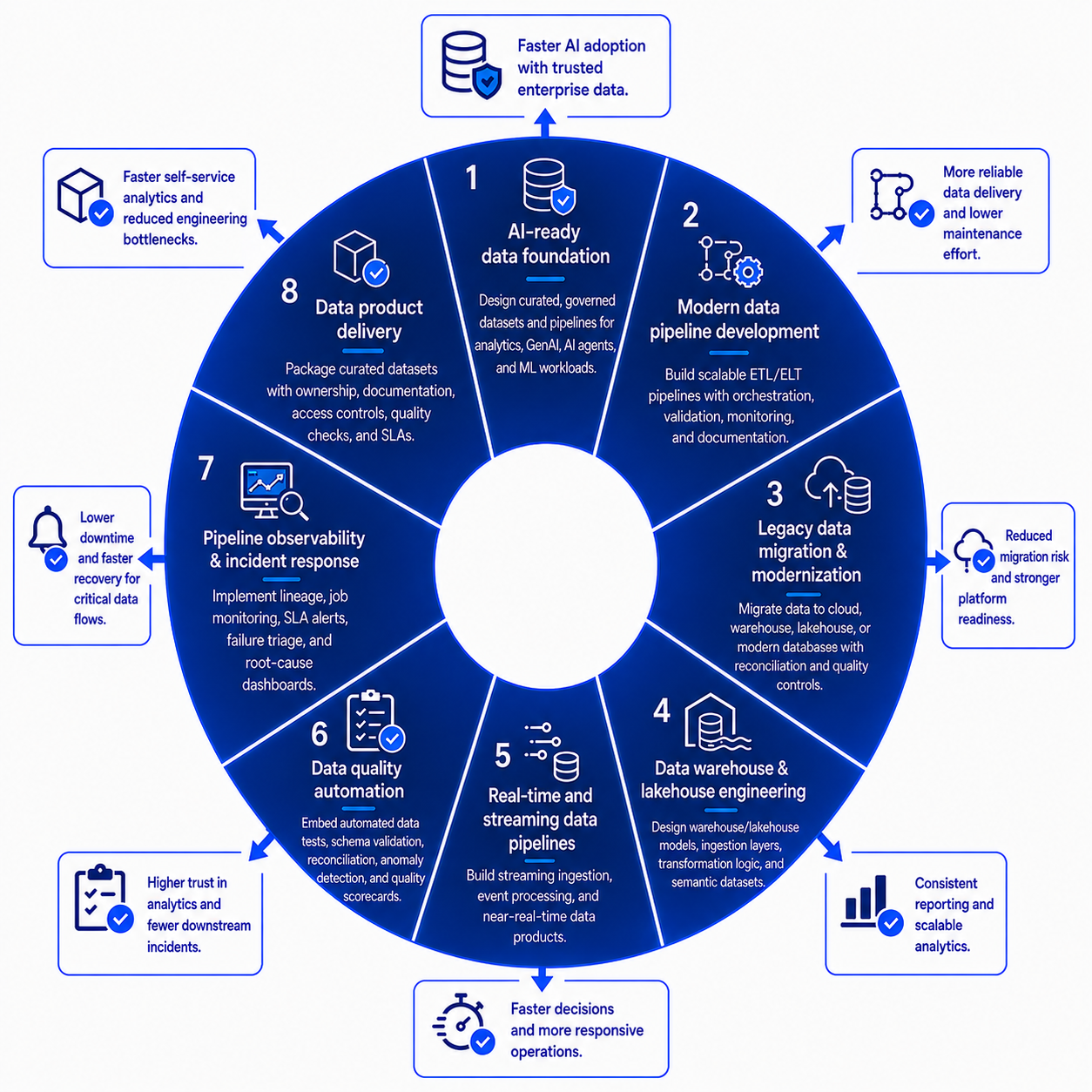
Enterprise Data Engineering & DataOps Use Cases

With our data engineering & data migration services, we help businesses modernize their data architecture and execute migrations with precision, delivering impactful results.

functions-GEM data engineering & dataops service

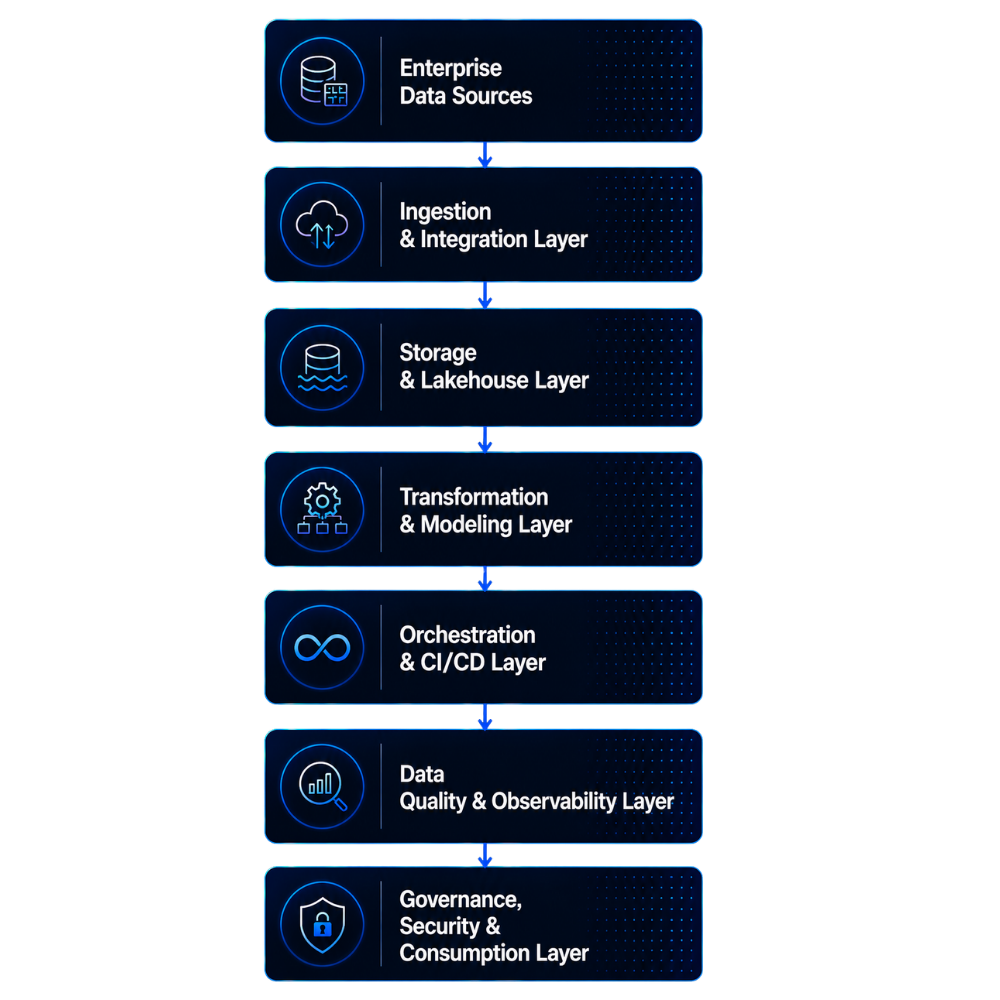
Key Components of GEM’s AI-Ready DataOps Architecture

With our Data Engineering & DataOps services, we help businesses modernize their data architecture and execute migrations with precision, delivering impactful results.

architecture- GEM's data engineering & dataops services

How We Deliver

Step 1: Assess (1-2 weeks)

Audit data sources, pipelines, migration risk, data quality, platform maturity, governance gaps, analytics/AI use cases, and operating model.

Step 2: Architect

Design target architecture, platform patterns, ingestion strategy, data model, governance controls, quality gates, observability, and tooling.

Step 3: Build & Migrate

Build or modernize pipelines, migrate priority datasets, implement validation, automate deployments, configure orchestration and dashboards.

Step 4: Operate & Optimize

Monitor SLAs, pipeline failures, cost, quality, adoption, and performance; improve data products release by release.

Expected Business Outcomes

Every Data Engineering & DataOps engagement should begin with measurable data reliability and business-value KPIs. GEM defines the baseline before implementation and tracks improvement across pipeline reliability, data quality, governance, delivery speed, and AI readiness.

Why Choose GEM?

FAQs About Our Data Engineering & DataOps Services

Data engineering designs and builds the pipelines, models, and platforms that move and transform enterprise data. DataOps adds the operating discipline: automation, testing, CI/CD, observability, governance, and continuous improvement so data remains reliable in production.

Traditional data engineering often focuses on project delivery. DataOps focuses on ongoing reliability, repeatability, and trust by applying software engineering practices to data pipelines and data products.

GEM can work across cloud and hybrid environments, including modern warehouses, lakehouses, orchestration tools, BI platforms, data governance tools, and client-preferred enterprise systems. Tool selection should follow the client architecture and compliance requirements.

DataOps improves quality by embedding automated validation, schema checks, reconciliation, anomaly detection, lineage, ownership, and quality scorecards into the pipeline lifecycle.

AI systems need trusted, governed, and well-documented data. DataOps helps prepare reusable data products with quality controls, lineage, access rules, and freshness monitoring so AI teams can build with lower risk.

GEM reduces migration risk through source profiling, migration planning, data mapping, reconciliation, validation testing, phased cutover, rollback planning, and post-migration monitoring.

Yes. GEM can assess current pipelines, identify reliability and quality gaps, refactor critical workflows, introduce orchestration and observability, and modernize incrementally.

ROI can be measured through faster time-to-insight, lower manual effort, fewer data incidents, improved data quality, reduced pipeline downtime, lower compute waste, and faster delivery of analytics or AI use cases. Databricks also highlights how effective data governance and platform practices can improve operational efficiency and reduce unnecessary complexity.

Not always. GEM can modernize around existing systems, improve integration, migrate selected workloads, or design a phased target architecture depending on business priorities and technical constraints. Google Cloud also distinguishes modernization from simply replacing or migrating existing data workloads.

Related Articles

Discover Other Data Services

Tell us what’s holding your business back

Get a free transformation assessment: the right technology opportunities, expected business impact, and a practical roadmap. We reply within 1 business day.