




In December 2024, the Office of the Australian Information Commissioner (OAIC) reached a landmark $50 million settlement with Meta over the Cambridge Analytica matter, reinforcing a simple truth: poor data handling is no longer just a technical weakness, but a financial, regulatory, and trust issue.
Australia’s enterprise AI conversation has moved past experimentation. The real question in 2026 is no longer whether organisations should use AI, but whether they can do it safely, accountably, and at scale. That shift is happening under growing pressure: the OAIC reported 595 notifiable data breaches in the second half of 2024, up 15% from the prior six months, while the Australian Cyber Security Centre (ACSC) notified entities more than 1,700 times of potentially malicious cyber activity in 2024-2025, an 83% increase year over year.
At the same time, the Australian Government strengthened AI governance requirements, and the Australian Prudential Regulation Authority (APRA) warned that many boards are still building the technical literacy needed to challenge AI risk properly.
For many enterprises, the lesson is clear: investing in modern data governance solutions and strengthening enterprise data governance capabilities is no longer optional if organisations want to scale AI while maintaining trust, compliance, and operational resilience. This is precisely why organisations are increasingly evaluating data governance solutions that can provide visibility, accountability, and control across their data estate while establishing a scalable enterprise data governance foundation.

The 3 Data Governance Challenges That Quietly Undermine Enterprise AI
Below are three of the most common data governance challenges preventing organisations from scaling AI successfully:
1. Using fragmented, low-quality data with no clear lineage
This is one of the fastest ways enterprise AI loses credibility before it ever scales. Fragmented, low-quality data usually shows up as missing fields, duplicate records, inconsistent definitions, stale updates, and systems that are out of sync across finance, operations, customer, and product teams. In Australia, the impact is already visible: Treasury’s Consumer Data Right review said product development has been held back by data range and quality issues, including delays of up to 24 hours, missing fields, erroneous fields, and inconsistent data.
The business impact is not just “messy reporting.” Once data becomes fragmented, teams spend more time reconciling versions of the truth than using the data to make decisions. That creates slower product delivery, higher manual effort, weaker model performance, and less confidence in the output. Government of New South Wales (NSW)’s data governance guidance is even more direct: poor data quality leads to poor decisions and unintended outcomes, while high-quality data is essential for timely, accurate decision-making. This is why organisations are investing in modern data governance solutions to establish a trusted and consistent foundation for enterprise AI.
Without clear lineage, the problem gets worse because no one can confidently trace where a critical data point came from, how it changed, or which downstream model or report it affected. That makes root-cause analysis slow, makes upstream changes risky, and makes compliance harder to prove. Leading data governance solutions address this challenge by providing end-to-end data lineage visibility across systems, reports, and AI models. into how data moves across systems, reports, and AI models.
The consequence is not just bad analytics. It is slower release cycles, more manual rework, higher operating costs, weaker model performance, and a steady loss of trust from business users. Once teams stop believing the output, AI becomes a pilot that never graduates into production. That is why data quality, data lineage, and enterprise data governance are directly tied to ROI rather than compliance alone.
2. Ignoring privacy and security when feeding data into AI
In Australia, this mistake is getting more expensive because the privacy and cyber threat environment is intensifying at the same time. The OAIC said individual and representative complaints linked to privacy interference reached 3,295 in 2024-2025, and it has continued to pursue major enforcement action, including the $50 million Meta settlement and other landmark determinations. Meanwhile, the ACSC’s 2024-2025 cyber threat report shows the scale of the threat environment remains high, with more than 1,200 cyber security incidents responded to and more than 1,700 malicious-activity notifications issued to entities.
As regulatory scrutiny and cyber risks continue to increase, many organisations are turning to data governance solutions to strengthen visibility, control, and accountability across their data environments.
The consequence is that AI can amplify the blast radius of a privacy failure. If a model is allowed broad access to personal, financial, or health data without the right controls, one weak integration can expose more records, more workflows, and more users than a traditional system failure would. That leads to investigations, incident response costs, customer complaints, operational disruption, and long-term reputational damage.
The wake-up call is simple: AI makes privacy controls more urgent, not less. The more sensitive the data, the more important it is to control access, monitor usage, and prove that the organisation knows exactly where personal information is going and who can see it. In a market where breach reporting and enforcement are rising, “We’ll clean it up later” is no longer a workable operating model. This is why data governance solutions are increasingly viewed as a business necessity rather than a compliance initiative, particularly for organisations scaling enterprise AI.

3. Lacking a clear AI governance operating model
AI governance in Australia is moving from optional guidance to operational obligation. The Digital Transformation Agency (DTA)’s AI policy now requires stronger governance, mandatory foundational AI training, risk assessment, AI impact assessments, and transparency statements for Commonwealth entities. APRA has also warned that many boards still lack the technical literacy needed to challenge AI risk properly, and that some organisations rely too heavily on vendor presentations and summaries instead of testing the risks themselves.
When ownership is unclear, organisations do not just move slower. They become harder to govern.
Approvals get stuck, vendors are not challenged deeply enough, model drift is not monitored consistently, and nobody can answer basic questions such as who owns the model, who approves the data, who monitors ongoing risk, and who is accountable when something goes wrong. That is how AI becomes easy to launch but hard to trust. DTA’s AI assurance framework exists precisely because ad hoc or manual governance is not enough for safe scale.
For enterprise leaders, the business consequence is a governance bottleneck that slows transformation while increasing risk at the same time. The more distributed the operating model, the more likely it is that AI use cases will be approved inconsistently, monitored unevenly, or left without a clear escalation path. That is why governance has become a board-level operating issue, not just a policy issue.
Why Modern Data Governance Solutions Matter for Enterprise AI
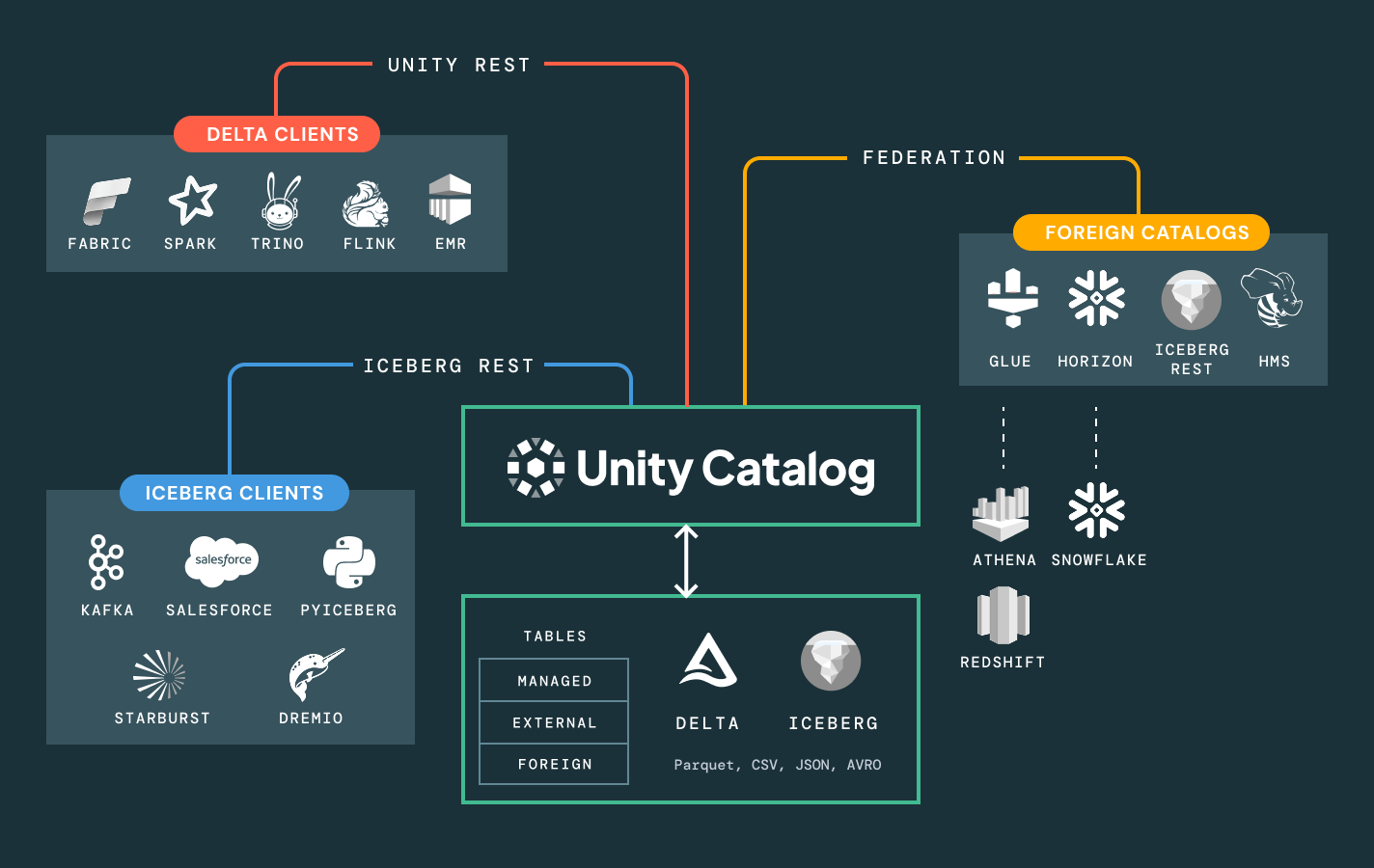
Among today’s leading data governance platforms and data governance solutions, Databricks stands out because it is not only a platform for AI execution. The platform combines enterprise data governance, security controls, and AI governance capabilities within a unified architecture. Databricks’ Unity Catalog is positioned as a centralised governance layer that provides access control, lineage, auditing, and data discovery across workspaces. Databricks also states that Unity Catalog offers fine-grained control, including centralised auditing for visibility into data, AI, and user activity.
Explore: How Databricks unifies data, governance, and AI on a single platform
As the three challenges above demonstrate, successful enterprise AI depends on more than model performance. Organisations need trusted data, built-in security controls, and a governance framework that scales alongside AI adoption. This is precisely where modern data governance solutions create business value.
The following three reasons illustrate how Databricks helps enterprises address each of the governance challenges discussed above:
1. Establish a single source of truth
(To eliminate data silos, improve data quality, and gain end-to-end lineage visibility)
When AI is introduced into this environment, the problem compounds. Models are trained on inconsistent datasets, business users question the outputs, and teams spend more time validating results than acting on them. Trust in AI deteriorates before value can be realised. This is why many enterprises are investing in modern data governance solutions to establish a trusted foundation for data, analytics, and AI.
This is where Databricks creates value beyond simply storing data.
Using Unity Catalog as a centralised governance layer, organisations can bring structured and unstructured data assets into a single governed environment while maintaining granular ownership and access controls. Rather than physically moving all data into one repository, Unity Catalog provides a unified view across data sources, allowing enterprises to:
- Establish a common business definition across departments
- Discover and locate trusted datasets more quickly
- Track data lineage from source systems to dashboards and AI models
- Identify upstream changes before they impact downstream analytics
- Reduce duplicate datasets and shadow reporting environments
Instead of asking “Which report is correct?“, teams can work from a common, governed foundation. When data lineage is visible end-to-end, data teams can immediately understand where training data originated, which transformations were applied, and which models are affected when data changes. This reduces model drift, improves explainability, and makes AI outputs more trustworthy for business stakeholders.
These capabilities are exactly why leading data governance solutions focus on creating a single source of truth across the enterprise rather than allowing data to remain fragmented across teams and platforms.
National Australia Bank (NAB) adopted Databricks’ Data Intelligence Platform together with Unity Catalog to provide trusted data access at speed, scale, and security for more than 8.5 million customers. According to Databricks, NAB invested in Databricks SQL and Unity Catalog to improve data discoverability, streamline governance processes, and establish end-to-end data lineage across critical business workloads. The outcome was not simply better reporting. It created a trusted foundation that enabled AI-driven use cases across marketing, financial crime detection, and digital decisioning.
Discover the full success story: NAB – Databricks
2. Enforce consistent data protection
(To strengthen privacy, security, and compliance across data and AI workloads)
Most organisations already have security tools. The challenge is that traditional controls were designed for applications and infrastructure, not AI.
As AI systems gain access to customer records, financial information, internal documents, and sensitive business data, organisations need more than basic access management. They need data governance solutions supported by strong AI governance and security controls that manage not only who can access data, but also which AI models can use it, what information can be exposed, and how data is used across teams and workloads.
Databricks addresses this challenge through centralised governance. With Unity Catalog, organisations can define policies once and enforce them consistently across analytics, machine learning, and AI workloads. Capabilities such as row-level security, column-level masking, data classification, and centralised audit logging help ensure sensitive information remains protected while enabling AI innovation.
Healthdirect Australia provides one of the strongest examples.
As Australia’s national government-funded health information service, Healthdirect operates under strict security and privacy requirements.
Healthdirect implemented Databricks to establish continuous data assurance capabilities, allowing the organisation to:
- Monitor access-control changes
- Detect metadata security modifications
- Identify potential data leakage risks
- Improve governance visibility across critical datasets
The organisation specifically cited Databricks’ ability to help meet Australia’s security requirements while providing stronger oversight of sensitive healthcare data. This demonstrates how enterprise data governance and AI governance can work together to protect sensitive information at scale.
Discover the full success story: Healthdirect – Databricks
3. Maintain continuous AI governance
(To establish accountability, manage risk, and scale AI with confidence)
Many organisations can successfully deploy AI models. Far fewer have a mature AI governance operating model.
As AI adoption expands, organisations must continuously monitor data access, model usage, policy enforcement, vendor interactions, and risk exposure. Without a clear governance framework, AI initiatives often become fragmented, resulting in:
- Unclear ownership and accountability for AI systems
- Inconsistent risk-management practices across departments
- Limited visibility into model behaviour and data usage
- Increased vendor and third-party risk
- Slower approval cycles for new AI initiatives
Over time, governance becomes reactive rather than proactive. Teams spend more time responding to issues than preventing them.
This is one of the key reasons enterprises are increasingly investing in modern data governance solutions. Effective AI governance is not a one-time compliance exercise; it must be embedded throughout the entire AI lifecycle.
Databricks addresses this challenge through a unified governance approach. Using Unity Catalog together with the Databricks AI Governance Framework, organisations can establish a centralised layer for policy management, access control, monitoring, auditing, and AI oversight. Rather than managing governance across multiple disconnected tools, enterprises gain a single source of visibility and control across both data and AI assets.
This allows organisations to:
- Standardise governance policies across data, analytics, and AI workloads
- Monitor model activity and data access from a central location
- Maintain audit trails for compliance and risk management
- Improve visibility into AI usage across teams and business units
- Reduce governance complexity as AI adoption scales
By embedding governance directly into day-to-day operations, organisations can move beyond periodic reviews and establish governance that continuously evolves alongside their AI initiatives.
Virgin Australia demonstrates the value of this approach. Seeking a more unified and trusted data foundation, the airline adopted Databricks and reported:
- 75% increase in near real-time data availability
- 50% reduction in data ingestion time
- 90% faster ML model deployment.
These outcomes highlight how modern data governance solutions can help enterprises scale AI faster while maintaining governance, trust, and operational control. This approach helps organisations operationalise AI governance while maintaining visibility and accountability across the enterprise.
Explore more: Real-world Databricks success stories
Final Takeaway
The $50 million lesson is not really about a privacy settlement. It is a reminder that AI outcomes are only as trustworthy as the data, governance, and controls behind them.
As Australian organisations accelerate AI adoption, the risks associated with fragmented data, weak security controls, and inconsistent governance are becoming increasingly difficult to ignore. These challenges do not just affect compliance. They directly influence the quality of business decisions, the speed of innovation, and the ability to scale AI with confidence.
The organisations achieving the greatest success with AI are not necessarily those investing in the most advanced models. They are the ones building strong foundations through modern data governance solutions, enterprise data governance, and scalable AI governance practices.
In an environment of growing regulatory scrutiny and rising cyber risk, data governance is no longer a supporting function. It has become a business-critical capability that determines whether enterprise AI delivers sustainable value or becomes an increasingly costly liability.

GEM – A Trusted Official Databricks Partner for AI & Data Governance Solutions
Addressing data governance challenges requires more than selecting the right technology. Successful data governance solutions depend on the ability to align data, governance, security, and AI initiatives within a scalable operating model that delivers measurable business outcomes.
As an official Databricks partner, GEM helps enterprises design and implement modern data governance solutions, enterprise data governance frameworks, and scalable AI governance operating models that address the challenges discussed throughout this article, from fragmented data and limited visibility to growing security requirements and AI governance complexity.
With 12+ years of experience delivering successful digital transformation initiatives, 14 Databricks certifications across a team of 10+ Databricks experts, GEM combines deep platform expertise with practical implementation experience. From data platform modernisation and Unity Catalog implementation to governance framework design and AI enablement, we help organisations deploy data governance solutions that support both business growth and regulatory compliance.
Whether you are modernising legacy data environments, strengthening governance controls, or building an enterprise AI roadmap, GEM can help you implement data governance solutions and tailored data governance services that improve visibility, reduce risk, and accelerate AI adoption at scale. By transforming governance from a compliance requirement into a strategic capability, we help enterprises unlock greater value from their data and AI investments.
Explore: GEM’s Data & AI Governance Services