




For the past two years, generative AI has dominated enterprise conversations. Companies rushed to deploy copilots, automate content generation, and experiment with AI-assisted productivity tools across departments. But as adoption matured, many enterprises began facing the same limitation: most AI systems could generate outputs, yet very few could independently execute workflows.
That is now changing.
A new wave of enterprise AI, commonly referred to as Agentic AI, is rapidly shifting the market from “AI-assisted work” toward “AI-driven operations.” Instead of simply responding to prompts, agentic systems can plan tasks, coordinate tools, make decisions, and continuously move toward business objectives with minimal human intervention. This shift is happening faster than many executives expected. According to a recent report, search interest in “Agentic AI” surged by 843% in a single quarter, generating approximately 1.3 million new searches worldwide.
What is Agentic AI?
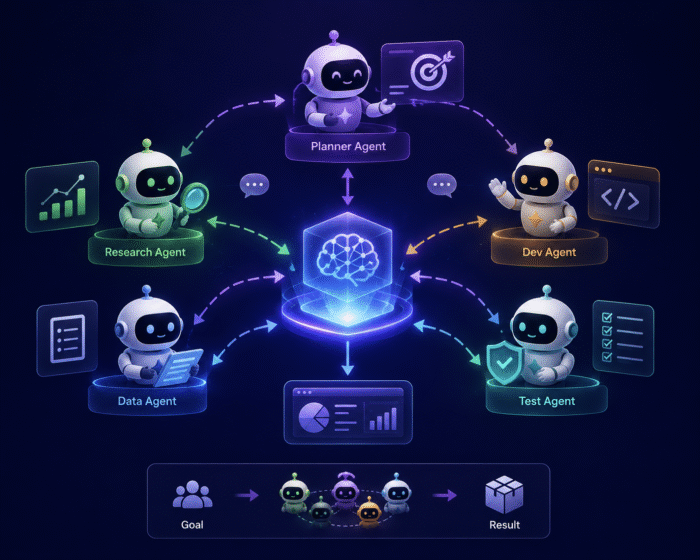
Agentic AI (or autonomous agent AI) is a breakthrough advancement in artificial intelligence that allows AI systems to independently plan, make decisions, and execute actions without requiring continuous human instructions. Unlike traditional AI “copilot” tools, agentic AI operates more like an “AI employee” capable of continuously adapting to the environment, learning from feedback, and improving its capabilities over time.
In fact, the concept of “agentic engineering” was recently proposed by Andrej Karpathy (co-founder of OpenAI) in early 2026, emphasising the use of multiple coordinated AI agents under human supervision to build software.
What makes agentic AI particularly compelling is its ability to move beyond prompt-response interactions and operate across real enterprise processes.
In customer service, for example, agentic systems can simultaneously manage requests from email, chatbots, phone calls, and social media while automatically summarising interactions and identifying customer sentiment to generate more context-aware responses. This allows enterprises to improve customer experience without requiring human intervention at every stage.
The same operational advantage is increasingly visible in project and workflow management. AI agents can monitor delivery progress, dynamically allocate resources, identify bottlenecks, and adjust execution plans in real time when priorities change, helping organisations improve speed, consistency, and operational coordination simultaneously.
Why Is Agentic AI Being Successfully Adopted?
For years, enterprises have viewed AI primarily as a productivity assistant, a tool that could generate text, summarise information, or support employees with repetitive tasks. But in 2026, the conversation is changing rapidly. Businesses are no longer asking, “Can AI help my employees work faster?” They are asking something much bigger:
“Can AI help my business operate smarter?”
That shift is exactly why agentic AI is gaining momentum so quickly across industries.
Below are the 4 biggest reasons why enterprises are moving aggressively toward agentic AI adoption:
1. It Turns AI from a “Tool” into an “Execution Layer”
Key idea: Traditional AI helps generate outputs. Agentic AI helps complete outcomes.
McKinsey (2026) notes that AI agents can automate complex multi-step workflows by combining planning, contextual memory, and multi-system interaction. Instead of acting like passive assistants, AI agents function as proactive collaborators capable of moving tasks toward completion. Verizon, for example, reported a 40% increase in sales productivity after deploying an AI assistant that reduced call-handling time.
This is the fundamental shift driving the rise of agentic AI. The first wave of generative AI focused heavily on content generation, writing emails, generating reports, summarising meetings, or creating code snippets. While useful, those systems still depended heavily on humans to coordinate execution. Agentic AI changes that model entirely.
Instead of simply producing information, AI agents can now take action across workflows: monitoring systems, coordinating tools, escalating issues, adjusting priorities, and continuously progressing toward predefined goals. That is why enterprises are beginning to view agentic AI as a true operational capability rather than a standalone assistant.
For C-level leaders, this matters because businesses do not measure value based on how much content AI creates. They measure value based on how efficiently operations move forward.
2. It Is Already Producing Measurable Business Impact
Key idea: Enterprises are adopting agentic AI because the ROI is becoming visible faster than most emerging technologies.
Real-world implementations already demonstrate substantial business impact. Digital bank Nubank reported up to twelvefold efficiency gains in a major ETL migration after deploying Cognition AI’s Devin, according to BCG’s 2026 tech-services report. McKinsey (2026) also documented a bank using a hybrid digital factory model that cut software development time and effort by more than 50%, while a market research firm achieved more than 60% potential productivity gain and expected annual savings of over $3 million through a multi-agent solution.
One reason many technology trends struggle to scale is because enterprises cannot clearly connect innovation to business outcomes. Agentic AI is different. Its impact can often be measured directly through operational KPIs:
- faster delivery cycles
- reduced manual workload
- improved engineering throughput
- shorter resolution times
- and lower operational costs.
This makes executive buy-in significantly easier. When leadership teams see software delivery time and effort cut by more than 50%, and productivity rise by 20% to 60% in agent-assisted workflows, agentic AI quickly shifts from an innovation initiative into a strategic business investment. That is why many enterprises are moving beyond experimentation and beginning to operationalise AI agents at scale.
Want to build effective Agentic AI systems in production? Explore the infrastructure, orchestration, and AI accelerators shaping enterprise: Top 24 AI Accelerators 2026
3. It Helps Enterprises Scale Without Increasing Operational Complexity
Key idea: Modern enterprises are struggling less with lack of data, and more with coordination complexity.
Agentic AI can simultaneously process requests across email, chatbots, phone calls, and social media while automatically summarising interactions and identifying customer sentiment. In project management, AI agents can monitor progress, allocate resources dynamically, and adjust execution plans in real time. McKinsey also recorded that AI-enabled credit reporting workflows became more flexible, productivity increased by 30%, and operational backlog decreased by 30–50% as AI proactively detected and resolved recurring issues.
As enterprises grow, operational complexity tends to scale faster than workforce efficiency.
- More systems create more fragmentation.
- More customers create more coordination overhead.
- More teams create slower decision-making.
This is exactly where agentic AI becomes powerful. AI agents are particularly effective at orchestrating fragmented workflows across systems, departments, and communication channels. Instead of relying entirely on human coordination, enterprises can deploy AI agents that continuously monitor operations, route tasks intelligently, identify bottlenecks, and adapt workflows dynamically in real time.
For executives, the strategic implication is important: agentic AI does not simply automate tasks, it reduces organisational friction. And in large enterprises, reducing friction often creates more value than adding new tools.
4. It Allows Human Teams to Focus on Higher-Value Innovation
Key idea: The real value of agentic AI is not replacing people, it is elevating human capability.
Agentic AI helps automate repetitive operational tasks such as software testing, customer data aggregation, and reporting. GEM’s engineering teams, for example, use intelligent agentic chains to reduce repetitive workloads and focus more on innovative solution development. McKinsey also emphasises that AI systems perform best when operating under human supervision, where AI handles repetitive execution while human teams focus on strategic oversight and high-value decision-making.
One of the biggest misconceptions about agentic AI is that it is primarily a workforce replacement technology. In reality, the strongest enterprise value often comes from workforce augmentation. When AI agents take over repetitive operational execution, human teams gain more time for work that actually drives long-term business value:
- architecture design
- customer engagement
- strategic planning
- innovation
- and complex decision-making.
This shift matters because enterprises do not win through automation alone. They win by combining automation with human creativity, judgment, and adaptability. That is ultimately why agentic AI is gaining traction so quickly among forward-looking enterprises. It is not simply making operations faster. It is changing how organisations allocate human intelligence itself.
Agentic AI Is Reshaping the Future of Technology Services
What makes this shift especially important is that technology and outsourcing firms will likely feel the impact faster than most industries. Unlike traditional sectors where AI often supports isolated tasks, IT services businesses are fundamentally built around engineering workflows, operational coordination, delivery execution, and system management, areas where agentic AI can create immediate measurable impact.
According to BCG (2026), 1/3 of large enterprises are already deploying agentic AI at scale, while two-thirds expect outsourcing providers to design, implement, and operate AI agent systems that deliver business outcomes.
This transition is already changing how technology services are delivered.
Traditionally, outsourcing growth depended heavily on scaling headcount. More projects required more developers, testers, coordinators, and operational teams. Agentic AI is beginning to change that equation by automating repetitive engineering and operational workflows, including:
- software testing
- incident response
- reporting and documentation
- workflow orchestration
- monitoring and operational coordination.
Studies such as TDFlow and Agentic RAG for Software Testing demonstrate how multi-agent workflows can improve software engineering productivity, testing accuracy, and operational coordination at scale. Additionally, many enterprise projects now show that AI agents not only accelerate workflows but also contribute proactive improvement recommendations. For example, Azure AI Foundry can predict operational incidents before customers even report them.
For outsourcing and technology providers, this represents a major strategic shift from labor-based delivery models toward AI-enabled outcome delivery models, where clients increasingly expect faster execution, higher scalability, and intelligent operational automation from their technology partners.
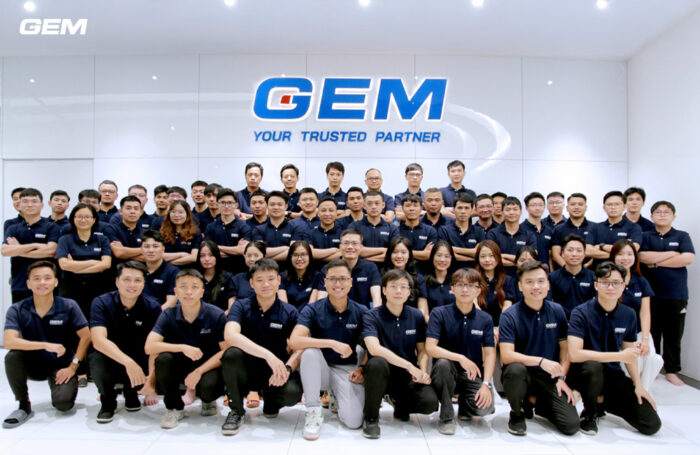
GEM – A Trusted Partner for Your Future of Agentic AI
At GEM, we are actively integrating agentic AI approaches into delivery workflows such as software testing, customer data aggregation, reporting automation, and operational coordination. By leveraging intelligent agentic chains, GEM helps reduce repetitive engineering overhead while enabling teams to focus more on architecture, innovation, and customer-centric problem solving. Our partners in Vietnam and globally have leveraged this advantage to accelerate large-scale digital transformation programs. For example, one banking application modernisation project implemented by GEM shortened the estimated timeline by nearly 70%, similar to the hybrid digital factory model results previously mentioned by McKinsey.
More importantly, we believe the future of agentic AI is not about replacing human expertise, but about amplifying it. The companies that adapt early will likely define the next generation of intelligent technology services.
Discover how we helped: A Leading Bank Accelerated Loan Processing by 70% Using AI-driven Knowledge Orchestration
Conclusion
Agentic AI is emerging as a new technology trend with the potential to fundamentally transform the digital business landscape. Real-world numbers and examples have demonstrated that it drives productivity, reduces costs, and creates new value for enterprises. For the software outsourcing and IT services industry, agentic AI not only helps optimise costs but also serves as the key to maintaining competitive positioning as the market expands by an additional approximately $200 billion, as projected by BCG (2026).