
RWA Tokenization Services

GEM’s RWA Tokenization experts help enterprises turn real-world assets – real estate, private credit, funds, and other illiquid holdings – into secure, compliant digital tokens, so they can be structured, distributed, and settled on-chain without losing regulatory and operational control.

Get an RWA tokenization feasibility assessment

NLP and AI Chatbot Development

Transform the way your business delivers services and support with intelligent NLP and AI chatbot solutions.

Get Started

Why RWA Tokenization by GEM Outperforms Traditional Asset

Blockchain-based tokenization changes the model. Representing ownership and economic rights in a real-world asset as a digital token – backed by the right legal structure, custody arrangement, and compliance controls – lets issuers reach a broader investor base, automate compliance and distributions, and settle transfers in near real time.

GEM’s RWA Tokenization service is built on this principle: connecting the legal and financial structure of the underlying asset to a secure, compliant tokenization architecture – covering asset structuring, smart contract design, compliance and investor onboarding, custody integration, and the platform investors and issuers actually use.

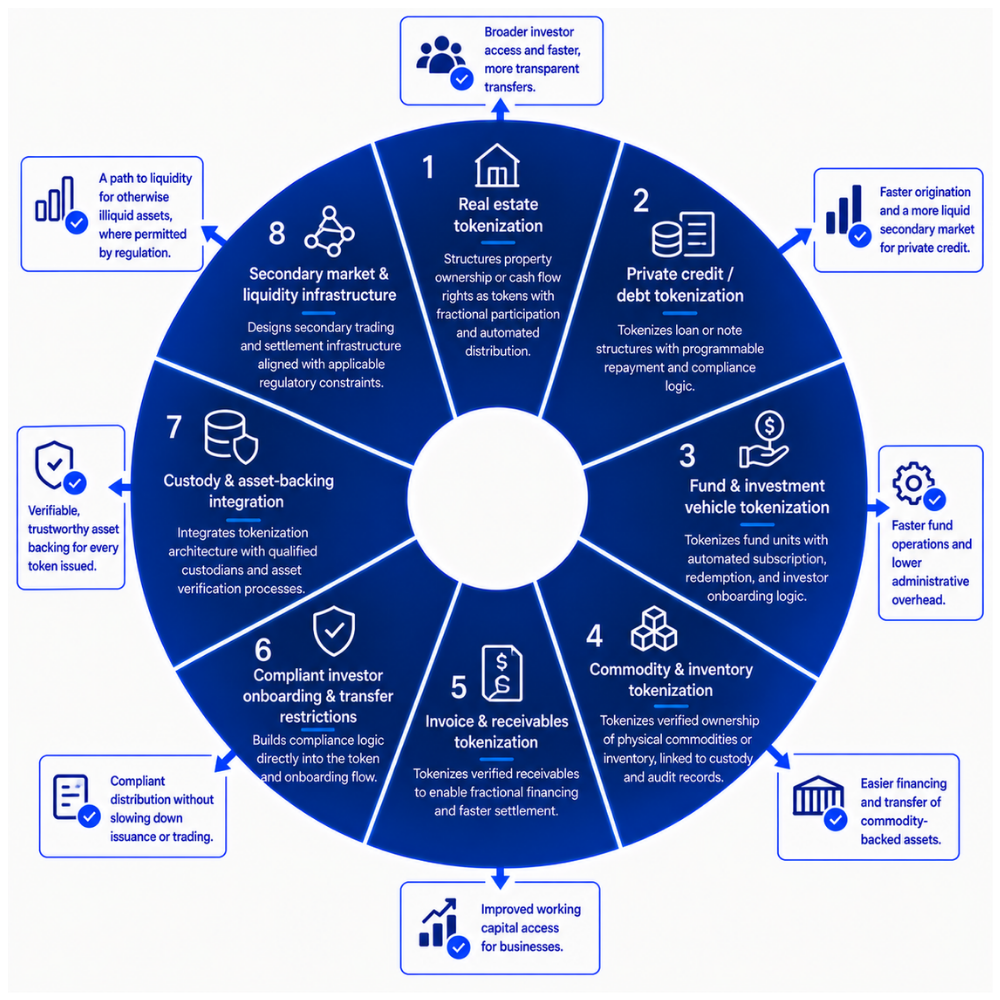
Enterprise Use Cases for RWA Tokenization

use cases - RWA Tokenization
NLP and AI Chatbot Development

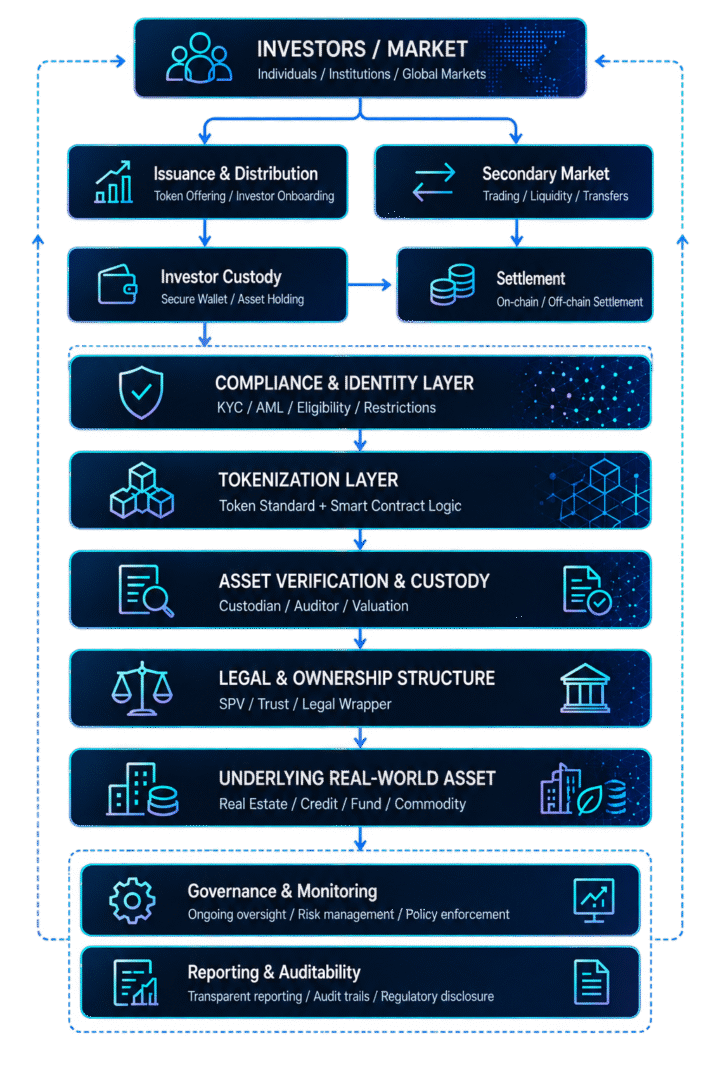
Key Components of Our RWA Tokenization Architecture

Tokenization does not replace an asset’s existing legal and financial structure. GEM builds the tokenization layer on top of the established legal, custody, and compliance foundations.

architecture - RWA tokenization

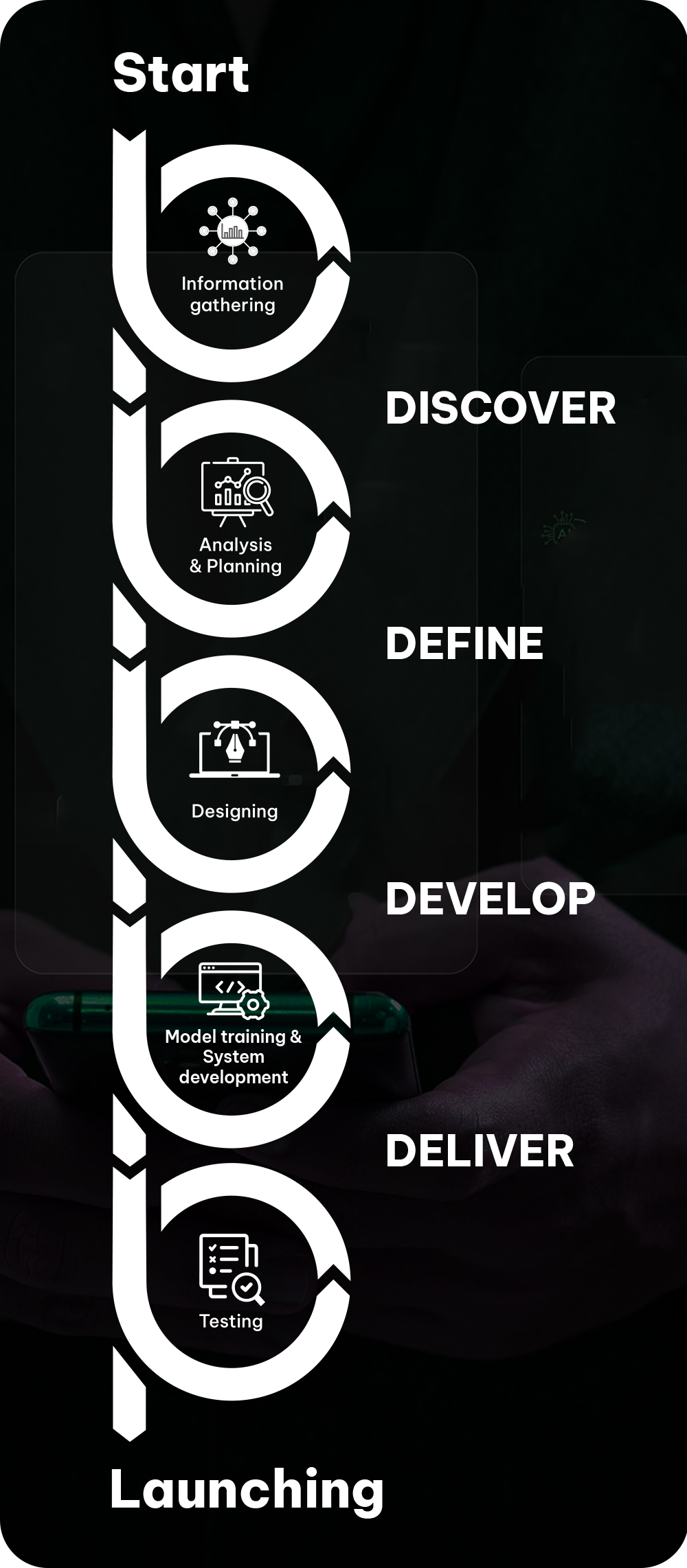
How GEM Delivers

Step 1: Assess & Structure

Evaluate the asset, legal structure, target investors, and jurisdiction to define a compliant tokenization model, working alongside your legal counsel.

Step 2: Design & Build

Design the token architecture, smart contracts, compliance logic, and integrations with custody and identity providers.

Step 3: Issue & Onboard

Support token issuance, investor onboarding, and initial distribution under the defined compliance rules.

Step 4: Operate & Evolve

Support ongoing distributions, reporting, secondary market operations, and platform evolution.

Expected Business Outcomes

Every RWA Tokenization engagement begins with an Assess & Structure phase. GEM evaluates the asset, legal structure, and target investors, and defines measurable outcomes before any technical build begins.

Why Choose GEM?

GEM’s RWA Tokenization Success Stories

See more

FAQs About Our RWA Tokenization Services

RWA (real-world asset) tokenization is the process of representing ownership or economic rights in a physical or financial asset – such as real estate, private credit, or fund units – as a digital token on a blockchain, backed by a defined legal and custody structure.

Tokenizing a real-world asset can involve securities, AML/KYC, and licensing regulations that vary significantly by jurisdiction and asset type. GEM designs tokenization architecture to support compliance requirements, but issuers should work with qualified legal counsel in their jurisdiction to confirm regulatory treatment before issuance.

Commonly tokenized assets include real estate, private credit and debt instruments, fund units, commodities, and receivables – the right structure depends on the asset type, jurisdiction, and target investor base.

GEM designs tokenization architecture around permissioned token standards built for regulatory compliance, such as ERC-3643, which embed investor eligibility and transfer restrictions directly into the token.

GEM builds compliance and identity verification into the onboarding and token transfer process, informed by international AML guidance for virtual assets, and adapted to the specific regulatory requirements of your jurisdiction.

The underlying asset is typically held by a qualified custodian or legal structure (such as an SPV or trust), while tokens may be held in investor-controlled or custodial wallets – the right model depends on the asset, jurisdiction, and investor base, and is defined during the Assess & Structure phase.

GEM selects the blockchain network based on the asset type, compliance requirements, cost, and integration needs, rather than defaulting to a single network.

Distributions and reporting can be automated through smart contracts and the issuance platform, reducing manual administrative work compared to traditional asset servicing.

No. GEM provides technical and architectural services for tokenization. Legal structuring, securities law compliance, and investment decisions should be made with qualified legal, tax, and financial advisors.

Related Articles

Discover Other Blockchain & Digital Asset Services

Tell us what’s holding your business back

Get a free transformation assessment: the right technology opportunities, expected business impact, and a practical roadmap. We reply within 1 business day.