




IT outsourcing has been the primary success strategy for businesses of all sizes. By partnering with external technology providers, organizations can access specialized expertise, reduce expenses, and focus on their core business functions. In this article, we’ll explore the top IT outsourcing countries around the globe so that businesses can gain insights into where they can find the best talent and value for their IT needs.
About IT outsourcing
As digital transformation moves from trend to necessity, companies of all sizes are shifting parts of their technology operations to third-party experts. IT outsourcing has evolved from a cost-saving tactic into a strategic move that supports growth, innovation, and resilience.
What is IT Outsourcing?
At its core, IT outsourcing is the practice of handing over specific tech-related functions to an external provider. These functions can range from software development, cloud infrastructure, and cybersecurity to technical support, data platform management, and QA testing.
Depending on business needs, organizations can choose between types of ITO models:
- Onshore outsourcing: Working with vendors in the same country
- Nearshore outsourcing: Collaborating with teams in nearby countries or time zones
- Offshore outsourcing: Partnering with providers in distant regions, often to gain access to broader talent pools or more competitive pricing
Rather than building and managing large internal teams, many companies, especially startups, scale-ups, and enterprise firms, use outsourcing as a way to stay lean while tapping into niche expertise.
Why Companies Choose IT Outsourcing
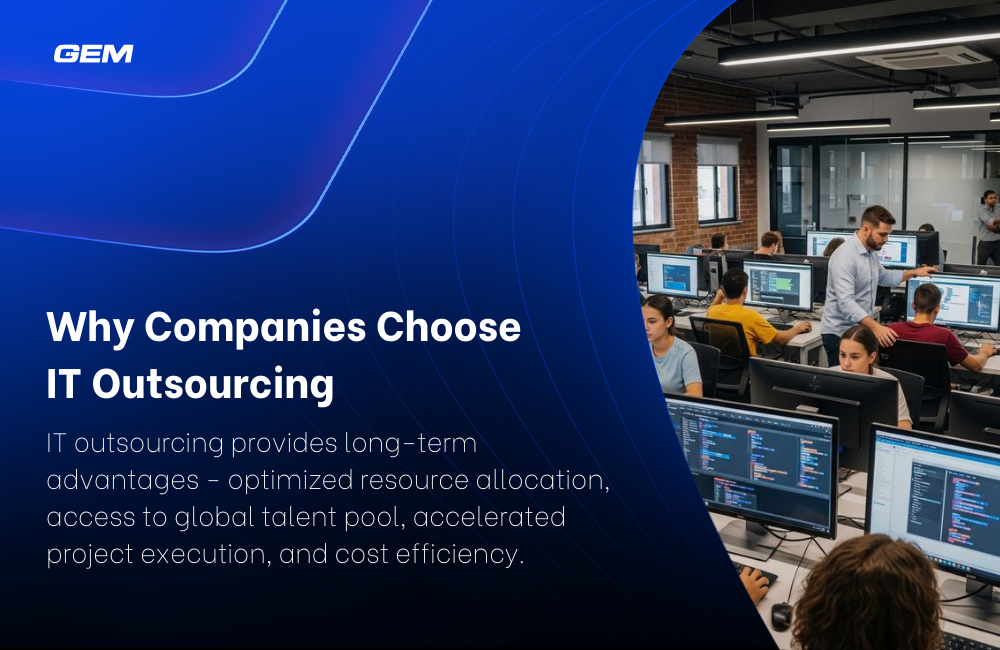
Business leaders are looking for long-term partners who can help accelerate outcomes. Here’s why IT outsourcing is on the radar of so many decision-makers:
Strategic Resource Allocation
Outsourcing frees up internal capacity so teams can prioritize high-value work, like customer experience design, product strategy, or market expansion, instead of getting bogged down in infrastructure maintenance or routine bug fixes.
Access to Specialized Talent
From AI engineers to cloud architects, outsourcing gives businesses access to global skills they might struggle to recruit locally. This is especially relevant for fast-moving domains like machine learning, DevOps, and enterprise automation.
Flexible Team Structures
Unlike hiring full-time staff, outsourcing makes it easier to adjust headcount based on project needs, seasonal demand, or product cycles. This is particularly useful during MVP launches, cloud migration projects, or security audits.
Cost Control
Outsourcing can help businesses optimize budgets, especially when working with providers in regions like Vietnam, India, or Eastern Europe, where operating costs tend to be lower while maintaining strong delivery capabilities.
Operational Risk Management
Reputable outsourcing partners bring in-depth knowledge of compliance, cybersecurity protocols, and disaster recovery planning. This helps reduce exposure to system failures or regulatory breaches.
Faster Time-to-Execution
With agile delivery models and distributed teams, companies can move faster from planning to deployment, especially for digital initiatives that require speed without compromising quality.
Read more: Unlock intelligent automation – Explore our NLP & AI Chatbot Development
2025 Insights on IT Outsourcing
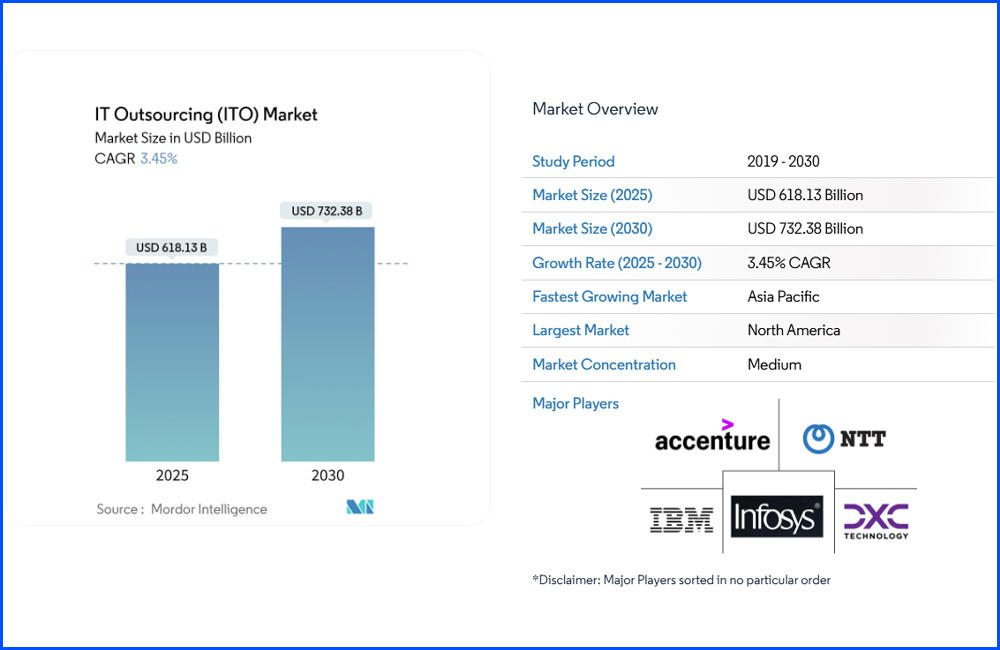
The IT outsourcing market size is estimated at USD 618.13 billion in 2025 and is forecast to attain USD 732.38 billion by 2030, reflecting a 3.45% CAGR during the period. (Mordor Intelligence)
|
Metric |
Insight |
|
Adoption rate |
92% of G2000 companies outsource at least part of their IT operations |
|
Savings potential |
Businesses save up to $6,474 per month by outsourcing, up to 85% compared to in-house teams |
|
Contract duration |
Average agreement spans 5 years, indicating long-term trust and recurring engagement |
|
Share of outsourcing |
IT services account for 75% of all global outsourcing contracts |
Best IT outsourcing countries in Asia, Europe, and America
When businesses look to outsource IT services, three regions consistently rise to the top: Asia, Europe, and Latin America. Each offers a unique mix of cost structure, talent availability, and delivery capabilities, making them go-to destinations for companies seeking reliable, scalable, and specialized tech support.
Why Asia, Europe and Latin America Lead in IT Outsourcing
Outsourcing isn’t just about lowering expenses, it’s about finding the right combination of technical depth, cultural fit, and operational reliability. That’s where Asia, Europe, and Latin America consistently outperform:
- Asia delivers scale and affordability, with large, tech-savvy workforces and strong government investment in digital infrastructure.
- Europe, particularly Eastern Europe, provides access to well-educated developers with strong domain knowledge and cultural alignment with Western clients.
- Latin America offers time zone proximity to U.S. companies and a growing pool of experts fluent in English and emerging technologies.
For companies planning long-term digital initiatives, like cloud migration, AI adoption, or product development, these regions offer the right balance of value and capability.
Best IT Outsourcing Countries in Asia
Asia has long been a global leader in IT outsourcing, thanks to competitive rates, deep engineering talent, and maturing tech ecosystems.
Vietnam
Vietnam has rapidly evolved from a low-cost alternative into a serious contender for high-quality IT services. With hourly rates in the range of $20–$45, it is one of the most Key advantages include:
- Over 60,000 IT graduates enter the workforce annually, supported by a national focus on tech-driven education.
- The government’s digital transformation roadmap and AI strategy have led to rapid investments in cloud infrastructure and smart city solutions.
- Vietnamese developers are known for their skills in web development, mobile app development, AI, blockchain, IoT, and quality assurance.
- English proficiency is improving, particularly in urban tech centers like Hanoi and Ho Chi Minh City.
- Vietnam’s time zone allows for effective collaboration with clients in Japan, Australia, and the United States, enabling continuous development cycles.
- Cities like Danang have emerged as alternative delivery locations, helping businesses diversify their development capacity.
Vietnam is particularly well-suited for companies seeking long-term engineering partnerships with flexibility in team size and delivery scope.
The Philippines
Hourly rates: $24–$54
The Philippines is a long-standing outsourcing hub, especially for business process outsourcing (BPO) and software support services. Its strong English proficiency and cultural familiarity with U.S. and European clients make it ideal for customer-facing roles.
Key advantages:
- A large base of IT professionals experienced in front-end development, mobile support, and technical documentation
- Strong government support through initiatives like the Digital Cities program
- Scalable teams for both tech and non-tech services, such as data annotation, manual testing, and application support
The country has also seen growth in specialized services such as cybersecurity support and cloud migration consulting.
India
Hourly rates: $20–$35
India remains a global leader in IT outsourcing, offering both scale and specialization. With more than 4 million IT professionals, India’s ecosystem supports everything from legacy modernization to AI product development.
Highlights include:
- Deep expertise in cloud platforms, ERP systems, machine learning, and DevOps
- Industry-specific experience in healthcare, banking, eCommerce, and telecom
- Thousands of outsourcing providers offering varied engagement models, including dedicated teams and product engineering as a service
India is also home to multiple tech hubs, including Bangalore, Hyderabad, and Pune, each with distinct domain strengths.
Are Inefficiencies Draining Your Resources? Let’s Fix That!
With GEM’s cutting-edge solutions, we’ll help you streamline workflows, optimize operations, and set your business up for sustainable success.
Best IT outsourcing countries in Europe
Europe, particularly Eastern Europe, has become a prime destination for IT outsourcing due to its highly educated workforce, strong technical skills, and cultural alignment with Western businesses.
The region offers a combination of quality service, competitive pricing, and convenient time zones for European and North American clients.
Poland
Hourly rates: $43–$65
Poland has become a top-tier outsourcing destination in Europe due to its strong educational institutions and EU-aligned regulatory framework.
Strengths:
- High developer rankings on global coding platforms
- Technical fluency in Java, C++, Python, and .NET
- Strong track record in enterprise software, SaaS platforms, and cloud-native applications
Its central geographic location and minimal time difference with Western Europe make Poland ideal for nearshore collaboration.
Ukraine
Hourly rates: $30–$60
Ukraine has developed a resilient and highly skilled IT workforce. Despite facing geopolitical headwinds, its outsourcing sector continues to grow.
Known for:
- Quality in web and mobile application development
- Strong presence in cybersecurity, fintech, and AI-driven platforms
- Agile delivery models, including staff augmentation and project-based outsourcing
Ukrainian developers have contributed to products used by global brands in finance, hospitality, and logistics sectors.
Romania
Hourly rates: $30–$50
Romania offers a solid mix of affordability and reliability. As an EU member, it adheres to GDPR and other regulatory standards, which is appealing for companies in finance or healthcare.
Key highlights:
- Technical strength in ERP, mobile development, and UI/UX design
- Developers trained in both open-source and Microsoft-based technologies
- Strategic proximity to Western Europe, allowing for easy travel and close collaboration
Romania is often selected for long-term outsourcing partnerships that require ongoing collaboration and predictable delivery.
Read more: Unlock new digital opportunities – explore our Mobile App Developmente
Best IT outsourcing countries in Latin America
Latin America has become an increasingly attractive region for IT outsourcing, especially for U.S. companies. Its geographical proximity to North America, similar time zones, and growing pool of highly skilled IT professionals make it an ideal choice for businesses seeking quality services at competitive prices.
Argentina
Hourly rates: $30–$50
Argentina continues to attract attention for its strong academic system and creative approach to software development.
Benefits include:
- High fluency in English and strong cultural alignment with North American clients
- Advanced skills in cloud platforms, machine learning, and data analytics
- Flexible engagement models, including remote dedicated teams and hybrid agile teams
Argentina is frequently chosen for projects requiring real-time collaboration and fast iteration cycles.
Brazil
Hourly rates: $30–$55
As the largest tech market in Latin America, Brazil offers both scale and specialization.
Key strengths:
- Diverse capabilities in enterprise solutions, fintech platforms, and eCommerce systems
- Deep bench of developers and system architects with experience in cloud integration, DevOps, and security frameworks
- Strong bilingual workforce, many of whom are fluent in both Portuguese and English
Brazil’s time zone alignment with the U.S. makes it ideal for companies seeking synchronized development cycles.
Comparative Snapshot: What Sets These Countries Apart
Selecting the right outsourcing destination depends on more than just hourly rates. Factors like time zone overlap, developer specialization, scalability, and legal frameworks shape how well a country fits your business needs.
The table below compares key outsourcing destinations across Asia, Europe, and Latin America:
|
Country |
Avg. Hourly Rate (USD) |
Time Zone Compatibility |
Technical Focus Areas |
Best Suited For |
|
Vietnam |
$20–$40 |
APAC / Partial US overlap |
Web & mobile development, AI, cloud, blockchain |
Agile teams, cost-sensitive product builds |
|
India |
$20–$35 |
Partial US / EU overlap |
AI, data science, enterprise software, cloud ops |
End-to-end development, full-stack engineering |
|
Philippines |
$24–$54 |
Full US overlap |
BPO, technical support, QA, mobile apps |
Customer-facing services, 24/7 support |
|
Poland |
$43–$65 |
Full EU / Partial US |
Enterprise platforms, DevOps, cloud-native apps |
Regulated industries, scalable EU delivery |
|
Ukraine |
$30–$60 |
EU / Partial US overlap |
Cybersecurity, fintech, AI-driven platforms |
Agile MVPs, security-heavy applications |
|
Romania |
$30–$50 |
EU / Partial US overlap |
ERP, mobile development, UI/UX design |
Vertical-specific solutions, long-term builds |
|
Argentina |
$30–$50 |
Full US overlap |
Agile delivery, data analytics, cloud integration |
Nearshore teams, iterative product cycles |
|
Brazil |
$30–$55 |
Full US overlap |
Enterprise apps, DevOps, fintech |
Bilingual delivery, enterprise-grade systems |
Key takeaways:
- Vietnam is ideal for companies seeking affordable, high-quality engineering talent with a strong focus on innovation.
- India offers the largest talent pool and is suited for complex, full-scale projects across multiple domains.
- Philippines provides strong voice and support capabilities, making it a go-to for BPO and IT support services.
- Eastern Europe (Poland, Ukraine, Romania) blends quality with regulatory alignment and is preferred for enterprise-grade software delivered with cultural compatibility.
- Latin America (Argentina, Brazil) stands out for U.S. firms seeking real-time collaboration and bilingual communication, especially for agile development and fintech.
Read more in our full guide to the Top IT Companies in the UK
Strategic Considerations When Selecting an Outsourcing Destination
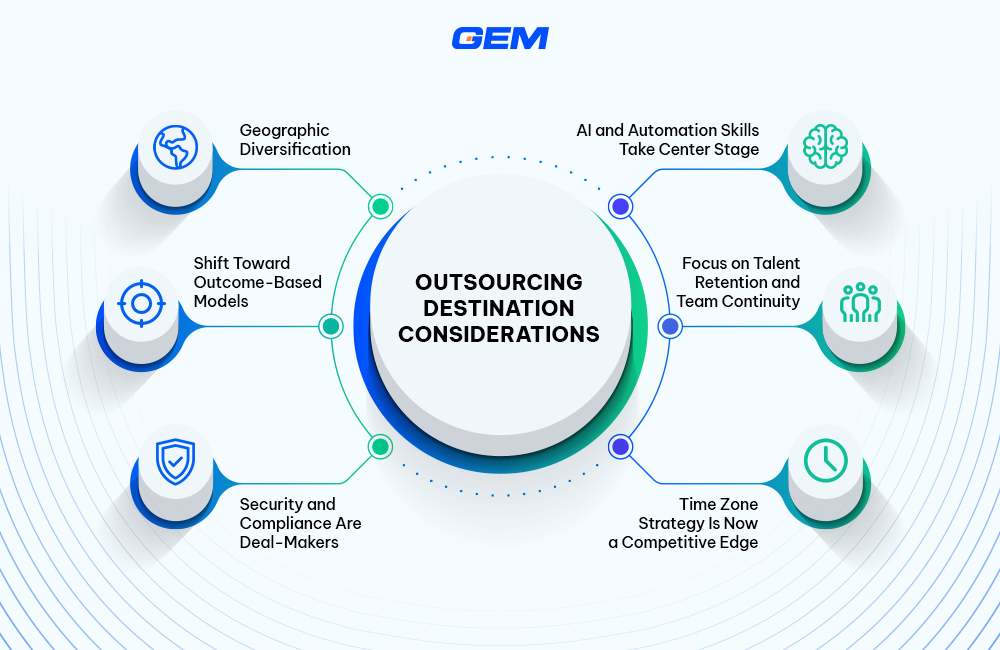
As the IT outsourcing landscape becomes more competitive and nuanced, companies need to rethink how they evaluate and engage outsourcing partners. Here are several strategic dimensions that will shape outsourcing decisions in 2025:
- Geographic Diversification
Relying on a single outsourcing location is becoming less viable due to geopolitical shifts, regulatory changes, and supply chain disruptions. Businesses are increasingly adopting a multi-location model to balance risk and maintain delivery continuity.
Example: A U.S. healthtech company might distribute work between Vietnam for product engineering, Poland for compliance-heavy modules, and Argentina for real-time support.
- Shift Toward Outcome-Based Models
Fixed-fee models are giving way to value-driven contracts focused on KPIs such as speed to market, quality of code, and product performance. This model requires tighter collaboration and more mature vendors who can commit to measurable outcomes.
Strategic shift: From “vendor” to “technology partner.”
- Security and Compliance Are Deal-Makers
With data privacy regulations tightening worldwide, outsourcing partners are expected to demonstrate strong credentials in areas like:
- ISO/IEC 27001 certification
- GDPR and HIPAA compliance
- Secure DevOps (DevSecOps) practices
This is particularly important for sectors like finance, healthcare, and e-commerce, where data integrity is non-negotiable.
- AI and Automation Skills Take Center Stage
Outsourcing is no longer just about writing code. Companies now prioritize partners skilled in:
- AI model development
- Automated testing and CI/CD pipelines
- Data engineering and cloud orchestration
These skills are especially valuable for companies modernizing legacy systems or deploying AI-powered platforms.
- Focus on Talent Retention and Team Continuity
High turnover within outsourced teams can derail projects. In 2025, companies are putting more emphasis on partners that invest in developer retention, career development, and internal training programs to ensure team continuity.
What to look for: Vendors with low attrition rates and structured onboarding practices.
- Time Zone Strategy Is Now a Competitive Edge
Time zone overlap is a productivity factor. Companies are pairing onshore or nearshore teams with offshore centers to create 24-hour development cycles without burning out internal teams.
Example: A SaaS provider might manage architecture in the U.S., development in Vietnam, and QA in Romania, creating a seamless handoff between time zones.
Why Wait? Start Your Digital Transformation Today
Don’t let outdated systems hold you back. With our expertise, you can streamline your operations, embrace innovation, and see measurable results faster than ever
What to Ask Your IT Outsourcing Partner?
The right questions reveal how a provider operates, how they respond to change, and how well they align with your priorities. These nine questions offer a practical framework for evaluating vendor fit – before, during, and after the engagement.
- What outsourcing model do you operate under?
Understanding whether the provider uses a fixed-price, time-and-materials, or hybrid model helps you assess the level of control, predictability, and flexibility you’ll have. Fixed-price models support clearly defined scopes, while time-and-materials may better accommodate evolving requirements and agile delivery.
- Can you share references from past clients?
Client references provide tangible insight into how the vendor performs under real-world conditions. They help validate claims around delivery quality, problem-solving ability, and long-term reliability. Ask specifically for projects that mirror your size, industry, and complexity.
- How do you manage security and data protection?
Security is a strategic differentiator. Ask about certifications (e.g., ISO 27001), secure development practices, and how they handle data encryption, access control, and compliance with regulations such as GDPR or HIPAA.
- What is your team’s experience with our technology stack?
Your vendor should be fluent in the tools, languages, and platforms your project requires. Dig deeper into past use cases, seniority levels, and how they stay current with evolving tech. This helps avoid capability gaps that can slow down delivery or compromise software quality.
Read more about our Generative AI services and how they accelerate digital transformation
- How will communication be structured?
Clear communication frameworks are essential for distributed teams. Ask about meeting cadence, reporting formats, escalation procedures, and collaboration tools. Look for a model that supports transparency, fast decision-making, and cross-functional alignment.
- What service level agreements (SLAs) are in place?
SLAs define expectations around uptime, bug resolution times, and responsiveness. Review the metrics used, how performance is tracked, and what remediation options are available if standards aren’t met. This protects both sides and provides a shared definition of success.
- How do you respond to changing project needs?
IT projects often shift direction. Ask how the vendor adapts to scope adjustments, resource scaling, and evolving timelines. A flexible partner can recalibrate quickly, without compromising delivery or requiring lengthy renegotiations.
- What additional services do you offer?
Many outsourcing providers now bundle consulting, training, UI/UX design, or DevOps support alongside their core development services. These adjacent capabilities can become valuable as your project matures or pivots into new phases.
- How do you handle project challenges?
Every project hits roadblocks. Understanding how the vendor addresses delays, code defects, or misaligned expectations reveals their maturity. Ask for real examples of how issues were resolved, and who was accountable.
These questions support a deeper vendor evaluation process, helping you move from a transactional relationship to a strategic partnership. The more aligned you are with expectations up front, the more resilient and productive the collaboration will be.
GEM Corporation – Your Reliable IT Outsourcing Partner from Vietnam
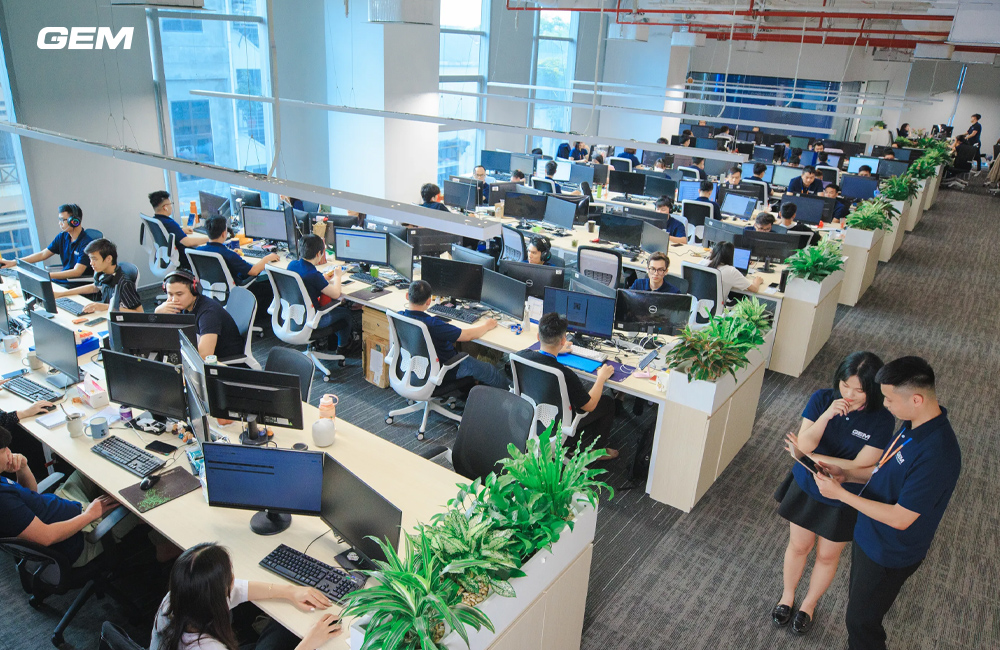
GEM Corporation is a global IT service provider with a delivery hub strategically located in Vietnam. Since our founding in 2014, we’ve been delivering technology solutions and professional services to clients across key markets, including Japan, ANZ, Asia Pacific, Europe, and the US.
Our Vietnam-based operation gives clients access to a high-performing talent pool of over 400 IT professionals, combining technical expertise with cost efficiency. We offer full-cycle services in software development, system integration, cloud platforms, and practical applications of AI and data analytics.
With a delivery model built on speed, quality, and reliability, GEM supports both enterprise clients and high-growth startups. Our governance is anchored by international standards: ISO/IEC 27001:2022, ISO 9001:2015, and CMMI Level 3. We are also an ISTQB Gold Partner and a Consulting Partner of both Databricks and ServiceNow.
Vietnam serves as our core engineering and delivery center, enabling scalable teams, flexible engagement models, and timezone-aligned support for global clients.
Bring your ideas to life faster than ever before
Our agile solutions streamline workflows and cut time-to-market, helping you launch innovations quickly and confidently.
What’s Next: Trends Reshaping the IT Outsourcing Market
The outsourcing industry is evolving in response to new technologies, operational models, and risk considerations. Several trends are shifting how organizations structure outsourcing engagements and what they expect from their external partners.
AI Automation and Cloud-First Delivery
AI is reshaping how services are delivered, both in terms of task automation and decision-making. Outsourcing providers are embedding AI into monitoring, testing, and customer interaction layers, accelerating delivery while lowering operational overhead.
- Predictive analytics and natural language processing are now used in areas such as system diagnostics and chatbot interfaces.
- AI-driven testing frameworks and monitoring tools are being adopted to support more autonomous systems.
Cloud computing, meanwhile, has become the default infrastructure layer. Outsourcing vendors are expected to manage hybrid and multi-cloud environments that support scale, flexibility, and global accessibility.
According to McKinsey, companies that transition to cloud-first operations report up to 25% faster product deployment timelines and lower infrastructure costs, making cloud capabilities a core expectation in any outsourcing agreement.
Read more: See how leading companies scale with our Digital Strategy Consulting
DevOps as a Delivery Standard
DevOps has moved from trend to baseline. Clients now expect vendors to support end-to-end deployment pipelines with built-in automation, version control, and rollback capabilities.
- Continuous integration (CI) and continuous delivery (CD) are becoming standard in outsourced software delivery.
- Outsourcing partners are often responsible for managing toolchains across development, staging, and production environments.
Vendors with DevOps maturity can deliver faster software iterations and maintain code quality under tight release cycles, especially important for SaaS, fintech, and eCommerce clients.
Heightened Focus on Cybersecurity
Security is no longer a post-launch concern. As cyber threats increase in scale and sophistication, clients expect proactive risk mitigation baked into the development process.
Outsourcing providers are being assessed not just on technical delivery, but also on their ability to:
- Conduct vulnerability assessments
- Implement security-by-design principles
- Respond rapidly to incidents and breaches
- Comply with sector-specific regulations
This is especially relevant in sectors such as healthcare, finance, and logistics, where data breaches can trigger regulatory penalties and reputational damage.
Conclusion
As global demand for high-quality, cost-efficient technology services grows, IT outsourcing remains a strategic lever for scalability and innovation. Markets across Asia, Europe, and Latin America each offer distinct advantages, from technical depth to time zone alignment. Vietnam, in particular, has emerged as a reliable delivery destination, supported by a strong talent base and modern infrastructure. GEM Corporation brings global reach and Vietnam-based execution together, delivering tailored solutions to clients worldwide.
To explore how GEM can support your outsourcing strategy, get in touch with our team today.
How is Vietnam positioning itself in the global IT outsourcing market?
When evaluating a destination, companies often weigh cost, talent availability, timezone alignment, language proficiency, and regulatory environment. For example, markets like Vietnam and India offer competitive rates and technical depth, while Eastern European countries provide closer cultural alignment and EU data compliance. The right choice depends on the project’s scale, complexity, and communication needs.
What distinguishes high-performing outsourcing vendors from transactional providers?
High-performing vendors go beyond task fulfillment and act as technology partners. They bring structured delivery models, proactive communication, measurable KPIs, and domain-specific expertise. Certifications such as ISO/IEC 27001 and CMMI Level 3 also signal operational maturity. These characteristics support long-term value creation rather than short-term cost savings.
How are trends like AI, DevOps, and cloud computing influencing outsourcing strategies?
Clients now expect outsourcing partners to support modern architectures and automation-driven operations. AI is used to streamline testing and predictive maintenance, DevOps enables faster release cycles, and cloud-first delivery ensures scalability. Providers that can deliver across these domains are becoming integral to digital transformation programs.
What role does vendor flexibility play in successful outsourcing engagements?
Flexibility determines a vendor’s ability to adapt to evolving project scopes, team scaling, and shifting business goals. This includes offering multiple engagement models, rapid onboarding, and responsiveness to feedback. In dynamic environments, rigidity can stall progress, while adaptable partners help maintain momentum and reduce operational risk.