




Contents
- Software Development Outsourcing in the Philippines
- How much do you pay to outsource IT functions in the Philippines?
- What influences the cost of IT outsourcing in the Philippines
- Top 5 IT outsourcing companies in the Philippines
- Factors to Consider When Considering Philippine Outsourcing Companies
- Conclusion
With businesses worldwide increasingly relying on technology to drive growth and innovation, finding cost-effective IT solutions has become essential. The Philippines has emerged as a prime destination for IT outsourcing, combining affordability with a highly skilled workforce that meets global standards. In this article, we’ll explore the costs associated with IT outsourcing in the Philippines and highlight the top five companies leading the industry.
Software Development Outsourcing in the Philippines
IT Outsourcing Market in the Philippines
The Philippines continues to strengthen its position in the global IT services sector, supported by a growing base of service providers and sustained demand from international markets.
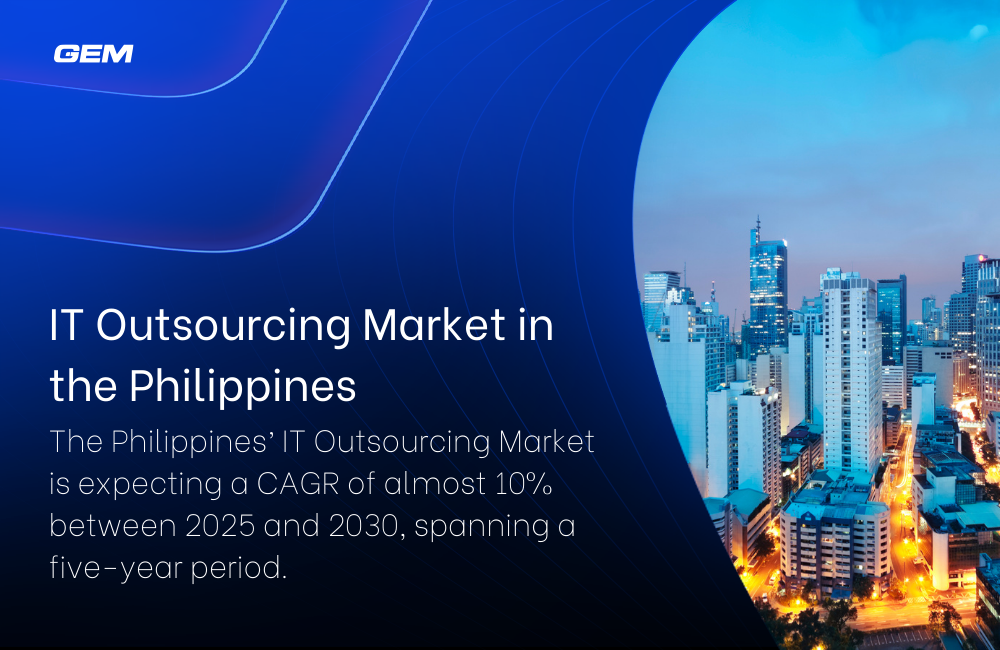
According to industry projections, revenue from IT outsourcing in the Philippines is expected to reach approximately USD 795 million by 2025 (Statista). Growth is set to continue through the end of the decade, with a projected CAGR of 9.74% between 2025 and 2030.
By 2030, the market volume is estimated to approach USD 1.27 billion. This trajectory reflects both increased investment in digital infrastructure and the country’s expanding role in software development and IT operations delivery.
Reasons Many Companies Outsource to the Philippines
Several structural advantages continue to position the Philippines as a preferred outsourcing location. These include:
- Skilled Workforce: The country has a large pool of IT professionals with experience across software engineering, cloud platforms, cybersecurity, and data services. Strong educational foundations and ongoing upskilling initiatives contribute to workforce readiness.
- Cost Competitiveness: Labor costs remain lower than in many developed markets. Government policies and favorable currency conditions support operational efficiency for offshore delivery.
- Cultural Alignment: English proficiency, shared business practices, and familiarity with Western enterprise environments contribute to effective collaboration.
- Global Standing: The Philippines is consistently ranked among the top three locations globally for IT and business process outsourcing, reflecting both delivery quality and international client adoption.
These factors continue to attract organizations seeking to expand software engineering capacity, manage cost pressures, or accelerate digital programs through global delivery models.
How much do you pay to outsource IT functions in the Philippines?
The cost to outsource IT in the Philippines varies based on the nature of the work, the skill level required, and the scope of engagement. For dedicated full-time roles, entry-level IT professionals typically range from $500 to $1,500 per month, while roles requiring advanced technical skills, such as software engineers, DevOps specialists, or data analysts, can reach $2,500 to $3,000 per month.
This cost model works well for companies seeking long-term support or looking to build stable offshore teams. It also provides visibility into monthly budgets and simplifies resource planning, especially for businesses with recurring IT needs.
Make your digital transformation seamless and future-ready
Accelerate your business growth with zero-disruption modernization services. Maximize the value of your current infrastructure, streamline processes, and cut expenses.
What influences the cost of IT outsourcing in the Philippines
A range of operational and project-level factors influence pricing when outsourcing IT functions in the Philippines. Understanding these variables helps organizations align expectations with available resources and make informed decisions on team structure, vendor selection, and project scope.
Image: chữ ở giữa [IT Outsourcing Cost]. Xung quanh là các ô tương ứng vs các key points trong section
Service complexity
The nature of the work being outsourced is a primary cost driver. Routine functions such as helpdesk operations or basic technical support tend to be more affordable due to lower specialization requirements. In contrast, advanced services, like custom software development, cloud infrastructure setup, AI model deployment, or cybersecurity monitoring, require deeper expertise, which comes at a higher cost. These projects also often entail longer delivery cycles and tighter quality controls, adding to the total investment.
Technology requirements
Technology stack plays a role in shaping both resource availability and pricing. Projects built on common languages (JavaScript, Python), mainstream frameworks (React, .NET), or open-source tools benefit from a broader talent pool and established delivery practices. On the other hand, projects involving specialized platforms, such as blockchain protocols, AI toolkits, or proprietary enterprise systems, may call for rare skills or licensed tools that increase both sourcing time and cost. Infrastructure and security requirements can also affect cost when outsourcing involves handling sensitive data or regulatory compliance.
Read more
Team size and composition
The number of people involved and how they’re structured directly affects the budget. A small-scale engagement might only need one or two contributors, while more complex initiatives require a cross-functional mix of roles – developers, QA engineers, solution architects, UX designers, and project managers. The more specialized the team, the higher the cost. Some service providers offer flexible team configurations, allowing companies to scale resources in phases based on delivery milestones.
Project timeline and duration
Longer engagements typically lead to higher total cost but may yield better value over time through stable delivery and knowledge retention. Compressed timelines can increase costs due to the need for additional staffing, overlapping shifts, or fast-tracked delivery cycles. It’s important to assess whether the project allows for phased rollouts or if time-to-market pressures require more intensive resourcing from day one.
Top 5 IT outsourcing companies in the Philippines
In this section, we explore the top 5 leading IT outsourcing companies in this country to give you a brief overview of their differentiators and key offerings.
Image: ảnh logo các cty
GEM Corporation
GEM Corporation is a global IT services partner specializing in custom software development, platform modernization, and practical data and AI solutions for enterprises at scale. Since 2014, GEM has delivered over 300 successful projects for clients ranging from Fortune 500 companies to digital-native startups. With more than 400 technology professionals, the company operates across key markets including Japan, Korea, Southeast Asia, Australia, the European Union, and the United States.
Our delivery model spans strategy, engineering, and operations, built around the principles of speed, quality, and reliability. GEM’s capabilities cover a broad range of enterprise needs, including:
- Custom Software Development – Tailored solutions designed to solve domain-specific challenges.
- Application Modernization – Re-architecting legacy systems into scalable, cloud-ready platforms.
- Cloud Services – Covering cloud-native development, migration, multi-cloud operations, and managed cloud environments.
- Data & AI Solutions – Encompassing data warehouse and lake implementation, governance, analytics, platform modernization, and AI integration.
- Quality Engineering & Testing – Functional, security, automation, and end-to-end application testing aligned to ISTQB Gold standards.
- Low-code/No-code Development – Accelerated application delivery to support business agility.
- Mobile and Web Development – Cross-platform applications and responsive digital experiences.
- Consulting & Strategy – Enterprise architecture, digital transformation roadmaps, and platform selection advisory.
- Managed IT Services – Full-lifecycle support for infrastructure, cloud environments, and business systems.
GEM’s commitment to delivery excellence is backed by globally recognized standards. We are ISO/IEC 27001:2022 and ISO 9001:2015 certified, with CMMI Level 3 accreditation for software development. As an official consulting partner of Databricks and ServiceNow, we bring advanced capabilities in data engineering and enterprise workflow platforms. These foundations allow GEM to support complex transformation programs while maintaining the discipline, quality, and security required at enterprise scale.
Bring your ideas to life faster than ever before
Our agile solutions streamline workflows and cut time-to-market, helping you launch innovations quickly and confidently.
KDCI Outsourcing
Founded in 2011, KDCI supports businesses through offshore teams across web development, design, IT services, and customer operations. The company works with clients in retail, e-commerce, healthcare, and professional services to streamline operational workflows and reduce delivery overhead. With a leadership team experienced in scaling enterprise operations, KDCI focuses on building long-term client partnerships through workforce continuity and performance alignment.
Global BrainForce
Global BrainForce blends European management practices with Filipino IT talent to deliver custom development and consulting services. Headquartered in Makati with leadership based in the Netherlands, the company has become a preferred partner for EU-based startups and mid-sized firms seeking cultural alignment, technical depth, and GDPR-compliant delivery. Global BrainForce also emphasizes long-term team development and cross-border collaboration.
Infinit-O
Infinit-O focuses on outsourcing solutions tailored to the finance and healthcare sectors. With 20 years of domain experience, the company supports digital transformation by combining industry knowledge with operational scale. Infinit-O works with clients to modernize delivery models, introduce automation, and maintain compliance across regulated environments.
Atticus Advisory Solutions Inc.
Atticus Solutions provides offshore staffing services for technology consulting firms, product teams, and high-growth startups. The company has developed specialized talent communities across platforms such as AWS, ServiceNow, and NetSuite. With a focus on proactive communication and delivery visibility, Atticus helps clients build agile, cost-aligned teams in the Philippines.
Read more
Factors to Consider When Considering Philippine Outsourcing Companies
Selecting the right software outsourcing providers in the Philippines requires a structured evaluation process. While the country offers a broad pool of providers, careful assessment is necessary to align capabilities with business priorities.
Delivery Capabilities and Technical Expertise
Assess whether the provider has proven experience in the specific technologies or platforms required for your project. This includes evaluating their track record across software development, cloud, data, and automation initiatives. Review past projects, client references, and the composition of their technical teams.
Industry and Domain Knowledge
Some providers specialize in sectors such as financial services, healthcare, e-commerce, or logistics. Domain familiarity supports faster onboarding, better compliance alignment, and smoother execution. Ask for examples of similar engagements within your industry.
Talent Availability and Team Structure
The ability to scale a delivery team with the right skills remains a core requirement. Review the provider’s approach to hiring, training, and retaining IT talent. Consider their mix of senior and mid-level engineers, testing professionals, architects, and project managers.
Quality and Delivery Assurance
Review the company’s development methodology, testing frameworks, and quality assurance processes. This includes their approach to documentation, code reviews, release cycles, and performance monitoring. Delivery assurance is often tied to consistent communication and clearly defined governance structures.
Read more
Security and Compliance Standards
Information security, data handling, and regulatory compliance should be central to the selection process, especially for industries with strict requirements. Confirm that the provider follows international standards such as ISO 27001 or SOC 2 and inquire about their internal security protocols.
Communication and Collaboration
Strong communication processes and time zone alignment are important to maintaining project momentum. Evaluate the provider’s collaboration tools, language proficiency, and approach to client engagement. Clear reporting structures and escalation paths also support smoother delivery.
Cultural Fit and Working Style
Cultural compatibility affects how teams collaborate and solve problems. Look for alignment in work ethics, decision-making approaches, and responsiveness. Providers with experience working with international clients often bring structured workflows that reduce friction.
Pricing Transparency and Contract Flexibility
Beyond hourly rates, assess the provider’s pricing structure, contract terms, and resource allocation models. Transparent pricing and flexibility in delivery arrangements support better cost control over time.
These considerations form a foundation for selecting an outsourcing partner that can support long-term objectives while maintaining operational clarity and delivery discipline.
Conclusion
When evaluating the cost to outsource IT in the Philippines, companies are not only tapping into competitive pricing, but also into a mature services ecosystem capable of supporting enterprise-scale needs. From software engineering to infrastructure and managed services, the top providers deliver both technical capability and operational reliability. As digital transformation demands continue to grow, the Philippines remains a resilient and cost-effective destination for outsourced IT. For organizations assessing offshore strategies, understanding the cost to outsource IT in the Philippines offers a clear path to scalable delivery, without trading off quality or control.
To explore how GEM can support your delivery needs with scalable teams and cross-border coordination, get in touch with us today.
How much does it cost to outsource IT functions in the Philippines?
Costs vary based on role complexity, experience level, and engagement model. Entry-level IT staff typically start at $500–$1,500 per month, while highly skilled professionals may cost up to $3,000 per month. Long-term contracts and larger teams often lead to more predictable rates, especially when working with established outsourcing providers.
What types of IT services are commonly outsourced to the Philippines?
Common services include software development, QA testing, infrastructure management, helpdesk support, DevOps, and data processing. Many providers also offer specialized services such as cloud engineering and cybersecurity, depending on client needs and technology stack.
Who are the top IT outsourcing companies in the Philippines?
The leading firms typically have a strong track record with international clients, a mix of offshore and hybrid delivery models, and deep capability across multiple technologies. These companies are known for high service continuity, robust security practices, and experience in handling complex enterprise requirements.
What should companies consider when choosing an IT outsourcing partner in the Philippines?
Key factors include the provider’s domain expertise, team scalability, pricing transparency, and alignment with your project timeline and tech stack. It's also important to assess their security certifications, communication protocols, and experience with clients in your industry or region.