




Contents
- Introduction to ServiceNow
- Why Businesses Consider ServiceNow Competitors
- Key criteria for evaluating ServiceNow competitors
- Who are ServiceNow competitors & alternatives in 2025?
- Quick Comparison Chart: Features, Pricing & Target Businesses
- ServiceNow vs ServiceNow Competitors: When to Switch?
- GEM Corporation’s ServiceNow Capabilities
- Conclusion: Which Alternative Is Best for Your Business?
As IT service management evolves, a growing number of organisations are reassessing their platforms. While ServiceNow remains a dominant player, alternatives are gaining traction among businesses seeking greater flexibility, improved cost structures, or a better fit for their operational model. This guide evaluates key ServiceNow competitors in 2025, outlining their strengths, limitations, and suitability based on business context.
Introduction to ServiceNow
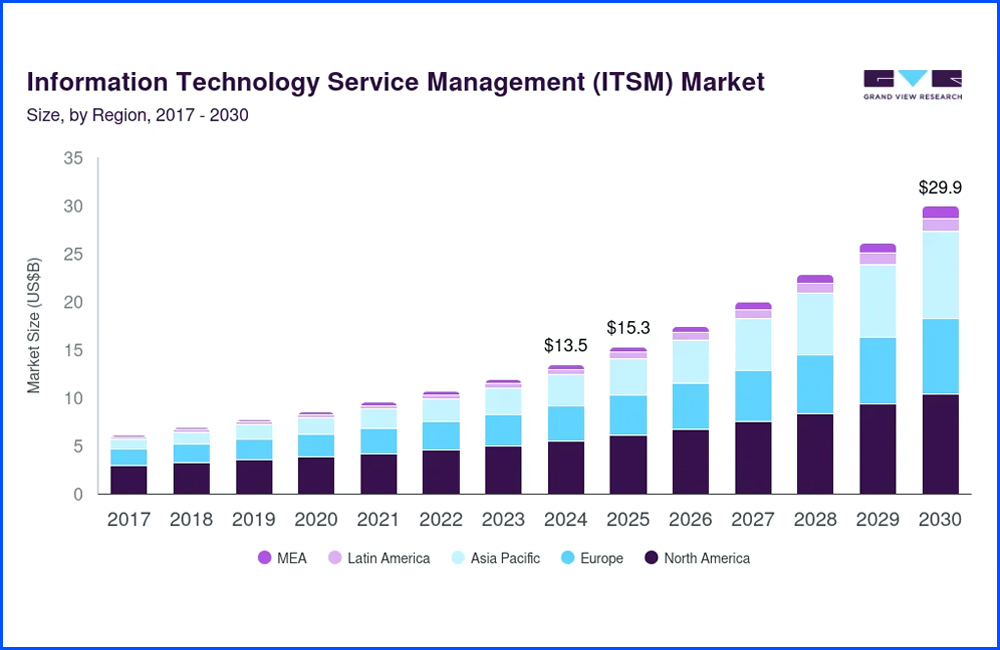
The global IT Service Management (ITSM) market is undergoing steady expansion, with market size projected to reach USD 29.9 billion by 2030 (Grand View Research). ServiceNow is one of the key players in this market, with its ITSM solution as a core service.
ServiceNow’s IT Service Management (ITSM) offering is at the heart of its enterprise platform. Built on a unified data model and backed by intelligent automation, ServiceNow ITSM supports incident, problem, change, request, and knowledge management. The platform also includes capabilities like virtual agents, auto-assignment, and predictive intelligence to reduce resolution times and increase service consistency.
What sets ServiceNow ITSM apart is its extensibility. It integrates with configuration management databases (CMDB), supports end-to-end SLAs, and connects with ITOM and ITAM to give IT teams a real-time, actionable view of service health.
For large enterprises navigating complex service environments, ServiceNow ITSM provides a structured framework that reduces fragmentation, increases visibility, and supports operations at scale. Still, this depth requires skilled configuration and long-term governance – factors that lead some organisations to explore more simplified or cost-aligned alternatives.
Why Businesses Consider ServiceNow Competitors
The decision to explore alternatives is often driven by operational realities. Businesses across industries cite several recurring factors:
Cost Structure
ServiceNow’s pricing model can strain IT budgets, especially for smaller firms or those adopting only a subset of its features. The total cost, including licensing, implementation, and support, can outpace value in leaner environments.
Deployment and Usability
The platform’s depth can be an asset, but also a barrier. For teams without dedicated ServiceNow administrators, navigating configuration, integrations, or reporting may require external support.
Integration Needs
While ServiceNow offers broad integration capabilities, aligning it with legacy systems or niche third-party tools can involve custom development. For businesses with varied system landscapes, this introduces complexity.
Scalability vs. Simplicity
ServiceNow is highly scalable, but not always lightweight. Smaller organisations or those adopting ITSM for the first time sometimes prefer tools with streamlined interfaces, quick deployment, and minimal setup.
Key criteria for evaluating ServiceNow competitors
To identify the right alternative, businesses should evaluate platforms against consistent benchmarks:
- Ease of Use: Interface clarity, admin usability, and user onboarding
- Pricing and Licensing: Transparency, flexibility, and alignment with usage patterns
- Feature Coverage: Breadth across ITSM functions – incident, change, problem, asset, and service catalog
- Integration Flexibility: API availability, pre-built connectors, and compatibility with current systems
- Scalability: Ability to grow with business needs, across regions, teams, and functions
- Support and Vendor Track Record: Responsiveness, documentation, community, and product roadmap.
Read more: Explore how ServiceNow can seamlessly connect with your existing systems and streamline your IT workflows — read our full guide on ServiceNow Integration
Who are ServiceNow competitors & alternatives in 2025?
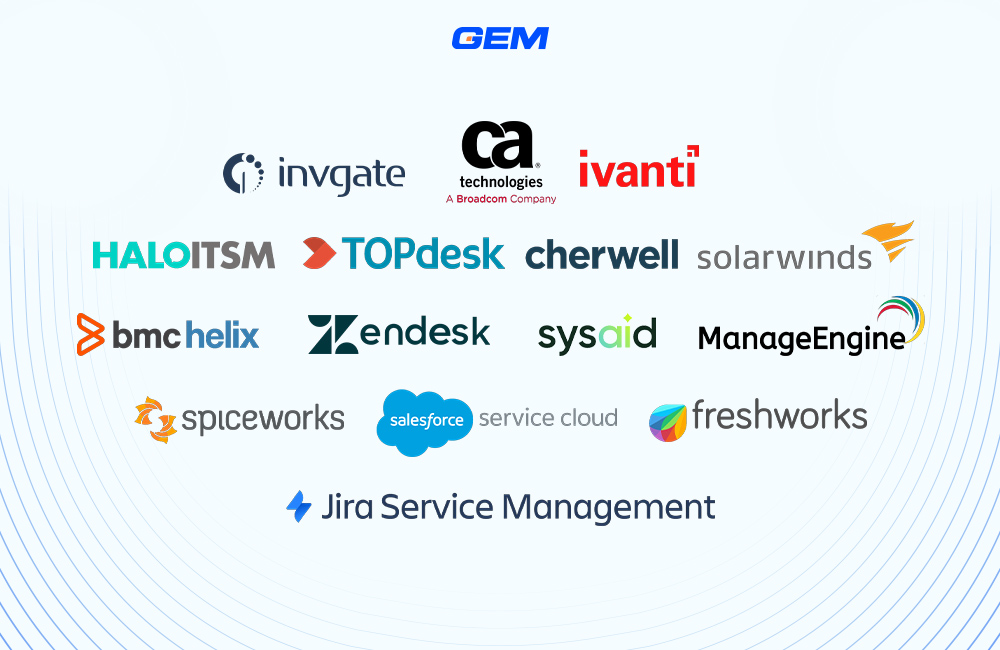
BMC Helix
BMC Helix is positioned as a direct contender to ServiceNow in large-scale IT environments. It delivers a cloud-native, AI-driven service and operations management suite, integrating ITSM, ITOM, and AIOps into a single platform. Its ability to automate root cause analysis and support multi-cloud environments makes it attractive to enterprises investing in digital transformation.
- Strengths: Deep AI capabilities, modular architecture, strong performance in regulated industries (e.g., healthcare, finance).
- Weaknesses: Implementation requires significant planning and skilled resources. Total cost of ownership can be high for mid-market firms.
Freshservice by Freshworks
Freshservice has found traction among fast-scaling companies and digital-native businesses seeking ITIL-aligned functionality without the overhead of enterprise platforms. Delivered via SaaS, it supports incident, request, change, and asset management, with a modern interface and built-in automation.
- Strengths: Fast time-to-value, transparent pricing, intuitive for non-technical users. Often adopted in education, retail, and tech startups.
- Weaknesses: Limited native support for complex workflows. Advanced reporting and orchestration require upgrades or third-party tools.
Zendesk
Zendesk brings customer service DNA into ITSM, offering a unified platform for ticketing, case management, and knowledge sharing. Its strength lies in customer-centric service workflows, especially where IT and customer support overlap – common in e-commerce and SaaS firms.
- Strengths: Strong omnichannel support, extensible API ecosystem, seamless integration with CRM and marketing tools.
- Weaknesses: Not built for ITIL maturity. CMDB, change management, and service catalog features are comparatively shallow.
Atlassian Jira Service Management
Jira Service Management is the ITSM extension of Atlassian’s broader toolset. It’s popular among engineering-led organisations for its native alignment with DevOps and agile delivery models. The platform supports custom workflows, incident swarming, and integrated knowledge bases via Confluence.
- Strengths: Deep integration with Jira Software, strong adoption in SaaS, fintech, and product-led teams. Highly configurable.
- Weaknesses: Requires technical expertise to configure. Out-of-the-box experience is basic relative to more prescriptive platforms.
Salesforce Service Cloud
Service Cloud extends Salesforce’s platform into IT operations, supporting case, incident, and knowledge management within the broader CRM context. It’s particularly effective for organisations aiming to unify customer and IT support functions under a common data model.
- Strengths: Native AI (Einstein), powerful analytics, consistent UX across sales, service, and operations. Strong in telecom and financial services.
- Weaknesses: ITSM module is not standalone, requires broader Salesforce investment. Customisation often requires certified developers.
Ivanti Neurons
Ivanti Neurons brings AI-driven automation and hyperautomation into ITSM, integrating endpoint management and service delivery. Its “self-healing” capabilities allow devices to auto-remediate issues, reducing ticket volume and improving uptime.
- Strengths: Real-time endpoint intelligence, predictive analytics, strong fit for distributed workforces. Used in government, transportation, and manufacturing.
- Weaknesses: Setup and tuning of AI models take time. Some organisations may not fully leverage its automation depth.
ManageEngine ServiceDesk Plus
ServiceDesk Plus offers a comprehensive ITSM suite at an accessible price point. It includes modules for incident, problem, change, and asset management, and integrates with other ManageEngine tools for endpoint and network monitoring.
- Strengths:Cost-efficient for SMBs, especially in education, healthcare, and local government. Easy to deploy and maintain.
- Weaknesses: UI is dated. Limited flexibility for enterprises needing advanced integrations or multi-region support.
SysAid
SysAid provides a flexible ITSM platform with cloud or on-premises deployment. It includes incident, change, and asset management capabilities.
- Strengths: Flexible deployment, robust self-service portal, responsive support. Adopted in logistics, utilities, and public services.
- Weaknesses: Interface modernization lags behind peers. Performance and workflow efficiency depend on backend tuning.
Read more: Discover how IT Service Management (ITSM) can transform your organization’s service delivery, improve efficiency, and enhance user satisfaction — dive into our comprehensive guide on ITSM
SolarWinds Service Desk
Originally Samanage, now SolarWinds Service Desk focuses on simplicity and out-of-the-box ITSM. It supports core modules such as incident, change, and service catalog, with native integration into SolarWinds’ monitoring and IT operations tools.
- Strengths: Clean UI, fast setup, strong appeal to mid-sized IT teams managing hybrid environments.
- Weaknesses: Feature coverage is limited at scale. Not well-suited for complex or regulated service environments.
Cherwell (Ivanti)
Cherwell, now part of Ivanti, is known for its visual workflow builder and highly customisable architecture. Its platform supports ITSM, HR workflows, and facilities management, making it attractive to large organisations with unique process designs.
- Strengths: No-code configuration, strong GRC capabilities, multi-tenant support. Used in finance, energy, and higher education.
- Weaknesses: Transition to Ivanti’s roadmap introduces uncertainty. Total cost and admin requirements are non-trivial.
TOPdesk
TOPdesk is popular in the public sector and higher education environments. It provides a structured ITSM platform with strong knowledge management and support for shared services. The platform is designed for ease of use and rapid deployment.
- Strengths: ITIL-aligned modules, multi-department support (e.g., IT, facilities, HR), low training overhead.
- Weaknesses: Limited extensibility for complex automation or integrations. Less suited for global enterprise scale.
Spiceworks
Spiceworks offers a free help desk and asset management tool, commonly used by startups and IT teams with limited budgets. The platform runs on an ad-supported model and is maintained by a large user community.
- Strengths: No licensing fees, active forums, fast deployment. Strong fit for small office or internal IT teams.
- Weaknesses: No SLA enforcement, minimal analytics, and limited roadmap clarity. Risk of vendor lock-in due to the ad model.
InvGate Service Desk
InvGate provides a modern ITSM platform focused on automation and analytics. It includes visual dashboards, self-service, and process design tools, targeted at mid-market firms looking to professionalise service delivery.
- Strengths: Competitive pricing, strong UI, native reporting. Gaining ground in Latin America and mid-sized enterprise markets.
- Weaknesses: Smaller partner ecosystem. The integration library is still expanding.
HaloITSM
HaloITSM offers full ITIL compatibility in a lightweight SaaS platform. It supports automation, self-service, and multi-channel support, and is gaining popularity among managed service providers (MSPs) and modern IT teams.
- Strengths: Clean design, global support, flexible licensing. Growing adoption among service-centric organisations.
- Weaknesses: Still building market maturity. Complex integrations may require vendor assistance.
CA Service Management (Broadcom)
CA Service Management is engineered for enterprise-scale operations, particularly in regulated sectors. It offers strong support for service catalog, compliance workflows, and SLA tracking, with deployment options ranging from on-premise to hybrid cloud.
- Strengths: Mature feature set, deep audit and compliance tools. Used in financial services, healthcare, and defense.
- Weaknesses: UI modernization has been slow. Implementation requires long lead times and dedicated resources.
Quick Comparison Chart: Features, Pricing & Target Businesses
| Platform | Best For | Estimated Pricing | Notable Features |
| BMC Helix | Large enterprises | Custom | AI automation, modular design |
| Freshservice | SMBs, startups | From $19/user/month | Self-service, fast deployment |
| Zendesk | Customer-facing support | From $19/user/month | Ticketing, CRM integrations |
| Jira Service Management | Agile teams, developers | From $20/user/month | DevOps integration, custom workflows |
| Salesforce Service Cloud | Salesforce users | Custom | CRM alignment, knowledge base |
| Ivanti Neurons | AI-driven operations | Custom | Predictive IT, automation |
| ManageEngine ServiceDesk Plus | SMBs | From $1.20/technician/month | Asset tracking, ITIL support |
| SysAid | Mixed deployment needs | From $1.25/user/month | On-prem/cloud, automation |
| SolarWinds | SMBs | From $19/user/month | Change management, reporting |
| Cherwell | Enterprises with unique workflows | Custom | Workflow builder, ITIL alignment |
| TOPdesk | ITIL beginners | From $2.80/user/month | Knowledge base, rapid setup |
| Spiceworks | Small teams | Free | Basic ticketing, asset registry |
| InvGate | Mid-market with analytics focus | From $2.50/user/month | Dashboards, automation |
| HaloITSM | Growing teams | From $2.50/user/month | ITIL modules, vendor support |
| CA Service Management | Complex enterprise environments | Custom | High-performance, secure workflows |
Read more: Learn how IT Operations Management (ITOM) and IT Service Management (ITSM) complement each other to optimize your IT processes, reduce downtime, and boost overall efficiency — check out our full guide on ITOM vs ITSM
ServiceNow vs ServiceNow Competitors: When to Switch?
Choosing the right ITSM tool depends on various factors, such as business size, budget, and specific service management requirements. Here are some key considerations for when to switch from ServiceNow to another solution:
- When Cost is a Concern
ServiceNow can be expensive, particularly for smaller businesses or organisations that don’t require all of its advanced features. If cost is a primary consideration, platforms like Freshservice, Spiceworks, and SysAid may provide similar functionality at a fraction of the cost.
- When You Need a Simpler, More Intuitive Interface
While ServiceNow is feature-rich, it can sometimes be overwhelming to use, especially for smaller teams or businesses with limited IT resources. Platforms like Freshservice and Zendesk offer more user-friendly interfaces, making them ideal for businesses that need an easy-to-use tool without a steep learning curve.
- When Your Business Needs AI and Automation
If your business is seeking an AI-powered ITSM solution to enhance automation and predictive analytics, BMC Helix and Ivanti Neurons stand out as excellent alternatives. These platforms leverage AI to drive automation and provide valuable insights, helping businesses optimize IT operations and improve service delivery.
- When You Need Agile or Development Team Integration
If you are a software development company or a business that follows agile methodologies, Atlassian Jira Service Management offers seamless integration with Jira, Confluence, and other Atlassian tools. This makes it the best choice for agile teams needing a flexible and customisable ITSM solution.
- When You Need High Customisation
Cherwell and CA Service Management offer extensive customization options for large enterprises or organizations with complex needs. These platforms allow businesses to tailor workflows, service processes, and reporting features to meet specific operational requirements.
GEM Corporation’s ServiceNow Capabilities
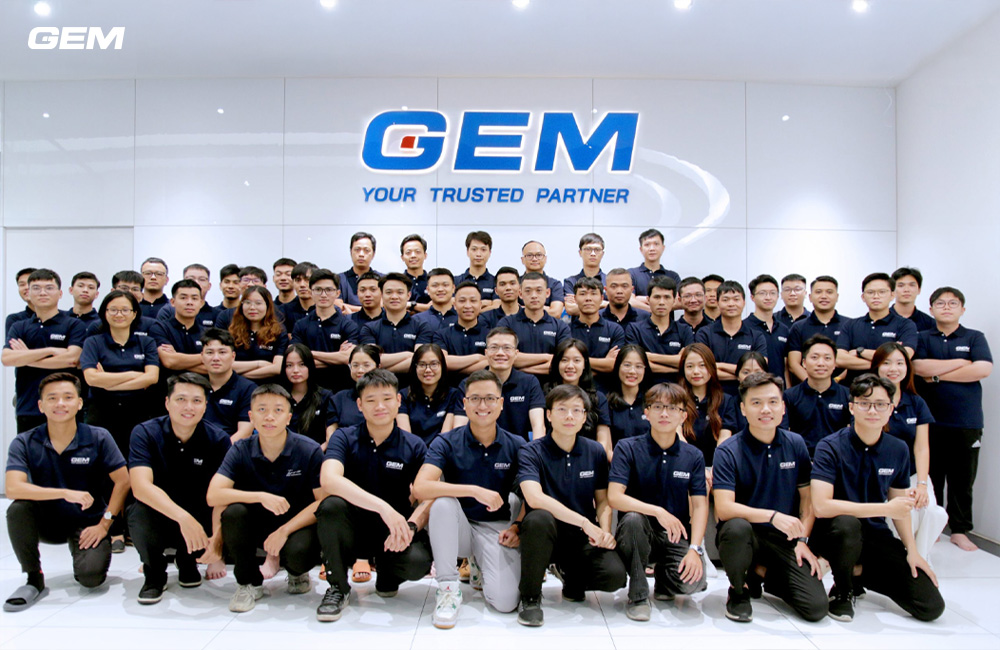
GEM Corporation delivers end-to-end ServiceNow solutions tailored to operational realities. As a certified ServiceNow partner, GEM supports clients in deploying and scaling key modules across IT, HR, customer service, field operations, and risk functions.
Our delivery model covers the full lifecycle, from initial scoping and architecture planning to post-deployment optimization. Clients rely on GEM to support a wide range of modules, including IT Service Management (ITSM), IT Operations Management (ITOM), IT Asset Management (ITAM), Customer Service Management (CSM), Human Resources Service Delivery (HRSD), and Governance, Risk, and Compliance (GRC).
Conclusion: Which Alternative Is Best for Your Business?
ServiceNow remains a benchmark in enterprise service management. Yet, the expanding field of ITSM platforms offers meaningful alternatives, each with a distinct combination of speed, flexibility, and cost-effectiveness.
Whether you’re managing a lean IT team or delivering services across a global enterprise, the right platform is one that aligns with your priorities – technical, financial, and operational. Assessing ServiceNow competitors through a structured lens, and matching capabilities to real needs, is the clearest path to long-term value.
To explore a ServiceNow implementation roadmap, contact our expert team!
Which ServiceNow competitors are best for small to mid-sized businesses?
Freshservice, ManageEngine ServiceDesk Plus, and SolarWinds Service Desk are frequently adopted by SMBs due to their lower setup time, transparent pricing, and ease of use.
Is there an alternative that supports both IT and customer service functions?
Zendesk and Salesforce Service Cloud are strong options for companies looking to unify IT support with customer-facing operations, offering shared workflows and data visibility.
How does GEM support ServiceNow implementation?
GEM delivers full lifecycle ServiceNow services, from architecture planning to post-deployment optimization. The team has experience across ITSM, ITOM, CSM, HRSD, GRC, and more, with a focus on aligning workflows to business outcomes.
When should a company consider switching from ServiceNow?
Common triggers include high platform cost relative to usage, long deployment cycles, or a need for simpler tools that can be managed in-house. Evaluating ServiceNow competitors becomes relevant when operational needs shift or budget constraints tighten.