




ServiceNow certification signals verified platform expertise and is a key factor businesses consider when choosing implementation partners. Working with certified professionals helps organizations align deployments with operational needs, reduce risks, and improve delivery timelines. This article explains the certification landscape, how it connects to how to get certified in ServiceNow, and why these credentials matter when evaluating external partners—along with the business case for prioritizing certified talent to ensure capability, reliability, and long-term value.
What are ServiceNow Certifications?
ServiceNow is a cloud-based platform used by enterprises to manage digital workflows across IT, HR, customer service, security operations, and more. It helps organizations consolidate systems, automate tasks, and align services with operational goals. As adoption grows, so does the demand for professionals who can configure and deploy ServiceNow solutions effectively and at scale.
A ServiceNow certification is a credential that confirms an individual’s ability to work with the platform in a structured, role-specific context. These certifications are designed to assess both theoretical knowledge and hands-on skills. The most widely recognized starting point is the Certified System Administrator (CSA), which validates foundational capabilities required to manage and maintain the platform.
Beyond CSA, ServiceNow offers multiple certification tracks organized by role and product area. These include mainline certifications for implementers and developers, expert-level programs for seasoned professionals, and micro-certifications focused on specific applications or outcomes. Each credential is tied to a formal exam and aligns with real-world use of the platform.
Who Should Consider ServiceNow Certification?
ServiceNow certification is relevant for professionals working in roles that involve building, managing, or supporting ServiceNow environments. This includes system administrators, implementation specialists, developers, business analysts, and consultants across IT and business teams.
The program represents a formal learning path that helps individuals build the skills needed for role-based execution in a ServiceNow ecosystem. For those involved in enterprise automation, IT service management, or digital transformation projects, certification offers a way to demonstrate readiness and align with industry best practices.
For organizations, certified resources serve as a signal of capability and consistency. Whether hiring internally or partnering with external providers, teams with certified professionals are more likely to deliver outcomes aligned with platform standards and business needs.
Top Reasons to Pursue a ServiceNow Certification
ServiceNow continues to expand its leadership across digital workflow markets. According to the 2024 Gartner® Market Share Report, the platform ranks No. 1 in six key technology segments, including IT Operations, IT Service Management, Event Intelligence, IT Asset and Software Asset Management, Project and Portfolio Management, and Other Security Software. In Q3 2025, ServiceNow reported $3.4 billion in revenue, an annual growth rate of 22%, underscoring sustained enterprise demand.
For professionals and organizations, these trends translate into strong incentives to pursue certification:
- High Market Relevance
Certification validates skills on a platform widely adopted across industries, enhancing your ability to contribute to transformation projects in IT, HR, customer service, and risk management.
- Career Mobility
Certified professionals are better positioned for roles involving platform administration, development, implementation, and project delivery. Employers often prioritize certified talent when staffing key initiatives.
- Project Readiness
Structured learning ensures that certified individuals are familiar with platform capabilities, implementation frameworks, and best practices, reducing onboarding time and improving delivery consistency.
- Vendor Recognition
Certification signals alignment with ServiceNow’s technical standards and product roadmap, which is particularly relevant for consultants, systems integrators, and managed service providers.
- Scalable Learning Model
The certification program offers multiple entry points, from foundational to advanced, making it accessible for both newcomers and experienced professionals seeking specialization.
Read more: Discover the most powerful ServiceNow integration capabilities for your workflows
ServiceNow Certification Path: From Foundational to Expert
ServiceNow offers a tiered certification framework designed to support different roles and experience levels. Each pathway is structured to validate real-world skills through formal exams.
Mainline Certifications
These are proctored exams focused on core platform roles. The most common entry point is the Certified System Administrator (CSA), which establishes baseline proficiency with ServiceNow functionality, configuration, and administration. CSA is a required prerequisite for many role-based certifications.
Other examples of mainline certifications include:
- Certified Application Developer
- Certified Implementation Specialist (with options for ITSM, HRSD, CSM, and more)
- Certified Technical Project Manager
Mainline certifications require periodic maintenance through delta exams to stay current with platform updates.
Expert Programs
Designed for experienced professionals, these programs represent the highest level of ServiceNow certification. Candidates must hold multiple mainline certifications and demonstrate hands-on experience before enrolling. Expert tracks include:
- Certified Master Architect (CMA)
- Certified Technical Architect (CTA)
These multi-month programs involve intensive workshops, project work, and peer evaluations. They are intended for those who lead enterprise-scale ServiceNow implementations or manage platform strategy.
Micro-Certifications
Micro-certifications focus on specialized areas within the ServiceNow ecosystem, such as Performance Analytics, Virtual Agent, or DevOps. These are typically non-proctored and assess knowledge of a specific product or feature. They are ideal for professionals looking to validate niche skills or stay current on new capabilities.
These certifications do not expire, although some may adopt maintenance requirements depending on product changes.
Each level of certification builds toward deeper platform fluency, helping individuals and teams align their skills with the evolving needs of ServiceNow deployments. For full details on available certifications and associated learning paths, visit ServiceNow University.
Understanding Course Options and Learning Tracks
At ServiceNow University, learners can access a structured catalog of training formats designed to build platform expertise across roles and experience levels. The core learning options include:
- Self-paced Courses
These on-demand modules allow learners to progress at their own speed. They are suited for individuals who prefer flexibility and already have some familiarity with ServiceNow. Topics range from platform fundamentals to product-specific instruction.
- Instructor-led Training (ILT)
Live sessions delivered by ServiceNow experts. Available virtually or in person, these courses provide real-time interaction and are aligned with certification paths. They are recommended for teams or individuals preparing for role-based certifications or working on implementation projects.
- ServiceNow Learning Subscriptions
Subscriptions provide access to a wide range of courses, hands-on labs, and certification prep content. Learners can choose a role-based path such as Administrator, Developer, Implementer, or Architect to match their current responsibilities or career goals.
Key role-based learning tracks include:
- Certified System Administrator (CSA)
- Application Developer
- Implementation Specialist (ITSM, HRSD, CSM, etc.)
- Technical Project Manager
- Platform Owner
- Business Process Analyst
- Support Specialist
ServiceNow also offers skilling programs such as RiseUp, aimed at building talent across the ecosystem through partnerships and scalable delivery models.
When selecting a course or track, consider the scope of your role, the depth of platform experience required, and the type of certification you’re pursuing.
Read more: Explore all essential ServiceNow modules for modern enterprises
How to Prepare for a ServiceNow Exam?
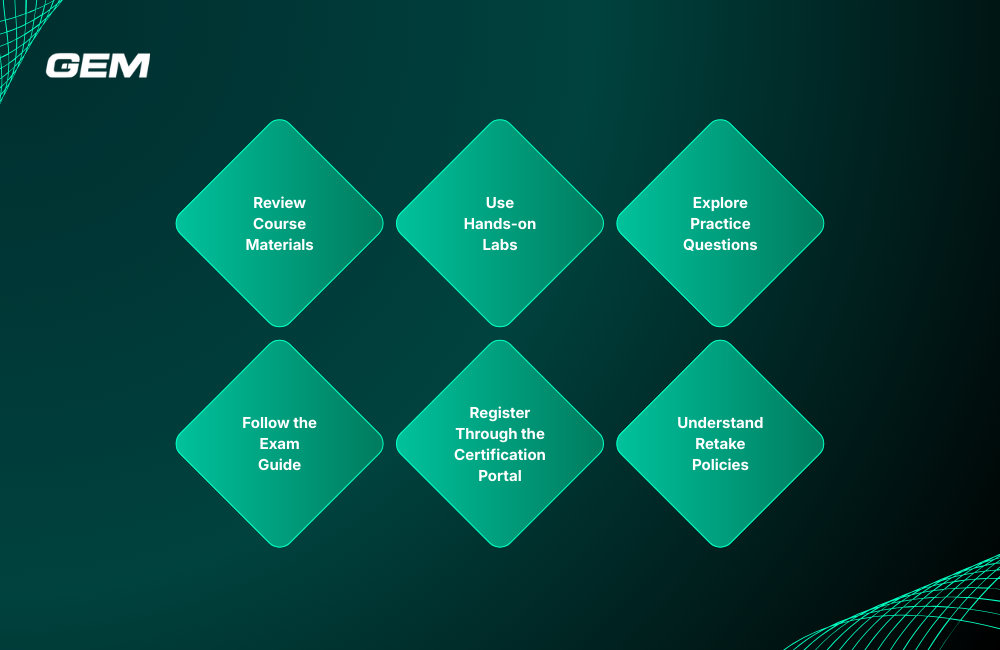
Preparation for a ServiceNow certification exam involves both structured learning and practical application. The following steps can support a focused study plan:
Review Course Materials
Use the official ServiceNow University training content aligned with your certification path. Each course includes product documentation, guided exercises, and reinforcement activities.
Use Hands-on Labs
Practice is essential. ServiceNow provides access to virtual labs where learners can apply concepts in a simulated environment. This helps build confidence using the platform’s tools and navigation.
Explore Practice Questions
Practice exams and sample questions are available to help learners understand the format and types of questions that may appear on the test. These resources reinforce key topics and help identify knowledge gaps.
Follow the Exam Guide
Each certification has an associated exam guide that outlines competencies covered, exam length, passing score, and recommended prerequisites. Reviewing this document ensures alignment between study efforts and exam requirements.
Register Through the Certification Portal
Exams are scheduled through ServiceNow’s official certification portal. Most mainline certifications are proctored and require an appointment. Micro-certifications may be taken on demand.
Understand Retake Policies
If a candidate does not pass an exam, there is a waiting period before retaking. The exam guide includes details on retake timelines and fees.
Why Companies Prioritize Certified ServiceNow Professionals
Enterprises adopting ServiceNow often operate in complex, multi-system environments where precision and reliability matter. Certified ServiceNow professionals bring verified expertise that directly supports smoother deployments and long-term platform value.
Certified individuals are trained on platform standards, configuration best practices, and implementation methodologies. This reduces the margin for error and accelerates delivery timelines. With certified talent in place, organizations are more likely to:
- Launch implementations with fewer reworks or escalations
- Achieve faster time-to-value through streamlined go-live processes
- Reduce project risks tied to misconfiguration or misalignment
- Improve user adoption through well-structured, intuitive workflows
- Align with ServiceNow’s product roadmap and update cycles with greater confidence
For businesses, certification is more than a credential. It’s an operational safeguard that supports both platform stability and strategic outcomes.
Stop trying to find the dots. Let us help you connect them!
With GEM as your ServiceNow Partner, accelerate delivery, reduce complexity, and gain a competitive edge in today’s fast-changing market.
How to Select a Suitable ServiceNow Partner?
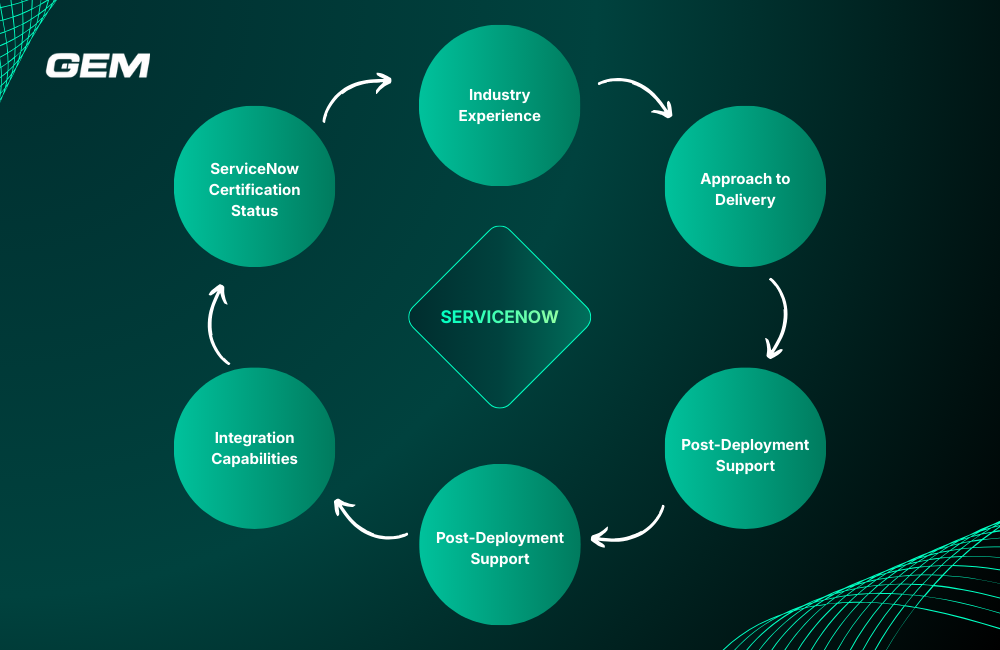
Choosing the right ServiceNow partner is a strategic decision that influences the long-term success of your investment. Beyond technical skills, a capable partner must demonstrate business alignment, delivery consistency, and a proven track record.
Key criteria to consider:
- ServiceNow Certification Status
Look for official ServiceNow Partner designation and a portfolio of certified professionals across relevant modules (e.g., ITSM, HRSD, CSM, GRC).
- Industry Experience
Evaluate whether the partner understands your sector’s regulatory, operational, and integration requirements.
- Approach to Delivery
Review their implementation methodology – does it support phased rollouts, governance, and measurable KPIs?
- Integration Capabilities
Confirm their ability to connect ServiceNow with legacy systems, data sources, and enterprise applications.
- Post-Deployment Support
Strong partners offer ongoing optimization, admin support, and platform governance beyond go-live.
- Client References and Case Studies
Request examples of recent implementations in environments similar to yours.
The ideal partner should function as an extension of your team, aligning platform capabilities with business outcomes while reducing operational friction.
GEM Corporation – ServiceNow Expertise at Enterprise Scale

GEM Corporation is a global IT company focused on delivering technology solutions that match real business objectives. Since 2014, we’ve supported digital transformation across Japan, ANZ, Asia, the EU, and the US, completing over 300 projects with a team of 400+ engineers and consultants.
As a certified ServiceNow partner, GEM provides end-to-end services across key modules such as ITSM, ITAM, HRSD, and CSM. Our delivery model is built on enterprise frameworks, industry-aligned blueprints, and a commitment to operational clarity.
With deep domain knowledge and platform fluency, GEM helps organizations turn ServiceNow into a scalable system of action that drives long-term value.
Conclusion
Earning a ServiceNow certificate reflects more than technical skill—it validates platform fluency, structured learning, and readiness to deliver in enterprise environments. For organizations evaluating implementation partners, certification signals delivery discipline, aligned practices, and reduced execution risk. From understanding course options to How to get certified in ServiceNow and selecting certified professionals and partners, this article outlines how certification supports both individual development and organizational outcomes.
If you are looking for a professional ServiceNow partner, Contact GEM now!
What types of certifications does ServiceNow offer?
ServiceNow offers mainline certifications (e.g., CSA, Developer, Implementer), expert-level programs (such as CMA and CTA), and micro-certifications focused on specific features or outcomes.
How can learners choose the right course for their goals?
Learners can choose from self-paced modules, instructor-led training, or subscription-based learning tied to role-based paths such as System Administrator, Developer, Platform Owner, or Project Manager.
Why do companies prioritize certified ServiceNow professionals?
Certified professionals bring consistent delivery practices, reduce project missteps, and support faster go-lives, making them a lower-risk, higher-value choice for enterprise implementations.
What should businesses look for in a ServiceNow implementation partner?
Key factors include certified talent across relevant modules, sector-specific experience, integration capabilities, a defined delivery approach, and the ability to provide long-term platform support.